
Dr. Manoj Dash, Bhubaneswar, 27 March 2026
In a quiet library in Nalanda centuries ago, scholars once believed that if they could gather all the scrolls of the world, they would possess all information that mattered. Today, information seekers no longer enter grand halls of libraries to store scrolls; they carry several oceans of content in their pockets. Yet the ancient question remains unchanged—what is worth knowing and what is worth trusting?
In this advanced information technology age, Artificial Intelligence (AI) dominates data-to-information and information-to-knowledge stages via processing and prediction. It has automated the tasks that once required human knowledge workers, like legal precedent matching or personalized teaching. But AI lacks true wisdom and unerring truth because it processes data without lived experience, empathy, and ethical intuition—relying instead on patterns from available data that include biases and gaps because of which it is unable to grasp ethics, context, and moral nuances. Embedding this clarity into the use of AI would ensure that humans should apply judgment where AI cannot, thereby fostering ethical decisions and harmonised societal progress.
Unpacking the Quadrant of Information, Knowledge, Wisdom and Truth
Information is data organized into meaningful patterns. It is the headline, the statistic, the image, the post. It answers basic questions: who, what, when, where? In today’s AI-driven world, information multiplies endlessly. Algorithms can generate narratives, images, and even voices that sound convincingly human. The problem is not of scarcity but of abundance. Information is like sand. There is more of it than we could ever hold. But sand alone cannot make a home.
Knowledge is information that has been processed, contextualized, and integrated with experience. It answers the question: how? When one compares sources, examines evidence, and understands cause and effect, one is able to transform information into knowledge. In the digital age, this step is often skipped by almost all consumers of information. Most of them scroll, react, and share without reflection. AI systems can generate plausible-sounding explanations in seconds, but plausibility is not understanding. Knowledge requires context, verification, pattern recognition and experience. If information is sand, knowledge is brick.
Wisdom is the ability to apply knowledge ethically and prudently in real-life situations. It answers the question: should. A wise person always asks what are the consequences; who might be harmed; what is my responsibility here? Wisdom slows down impulse. It resists outrage cycles. It recognizes that being technically correct is not the same as being morally right. If knowledge builds the house, wisdom decides the architecture, where to build it and whether it should be built at all.
Truth represents what is objectively real, independent of opinion or preference. Unlike information, truth does not multiply. It does not trend. It does not prevail just because it is popular. In a time when millions of users circulate edited clips, fabricated images, and AI-generated narratives, truth can feel fragile. But it is not fragile in reality—it merely gets obscured by fragile humans. Truth requires evidence, coherence, correspondence with reality and openness to correction. If information is sand, knowledge is brick, and wisdom is architecture—truth is the solid ground beneath it all.
Let’s make an attempt to understand these subtle differences through a concrete example. A traveller once visited the ancient city of Pataliputra during the time of Chanakya. He carried with him a small parchment containing a single sentence, “the well in the village square is poisoned.”
When the traveller first flashed the sentence, it was merely information. At this level, nothing had yet been verified, weighed, and properly understood. The sentence about the poisoned well was information even if it was false, even if it was misunderstood and even if no one had read it yet.
Now imagine the traveller confirmed that the well was indeed poisoned. He had seen villagers falling terribly ill. He tested the water. He understood the cause. Now the information got upgraded to knowledge. Knowledge is processed information that has been justified, verified, and integrated into understanding of others connected with a situation. Information floats but knowledge lands.
The story did not end there. The traveller faced the situation of making a decision. If he announced the poisoning publicly, panic might erupt. The elderly might get trampled in the rush. Inter-village trade might have collapsed. Yet if he said nothing, more might drink and fall sick. Wisdom emerged from how he responded.
He quietly informed the guards and organized safe water from an alternative source for distribution before making the announcement. He considered timing, tone, and consequence. Wisdom asks—given what is known, what ought to be done? It is ethical alignment with knowledge. After knowing that the well was poisoned, the traveller could still have acted foolishly. Knowledge fills the mind. Wisdom guides right and ethical action.
But deeper still lies the truth. Truth is not the sentence. Truth is not the confirmation. Truth is not even the wise response. Truth is the way reality actually stands, independent of the traveller, the parchment, the panic, and the thought process of the person who unravelled it. If the well was poisoned, it was poisoned whether proclaimed or silenced. Truth does not depend on belief. It does not bend to wisdom. It does not require witnesses.
In every age, humans got drowned not from lack of information, nor even from lack of knowledge—but from lack of wisdom in the glaring presence of truth.
Moving Forward in the Age of AI
We live in an era shaped by powerful tools developed by organizations such as OpenAI and deployed across platforms like Meta and Google. These systems can accelerate research, creativity, and discovery. But they also amplify noise. To thrive amid chaos, one must cultivate habits that machines cannot automate. Here are a few suggestions as one moves forward in the era of AI.
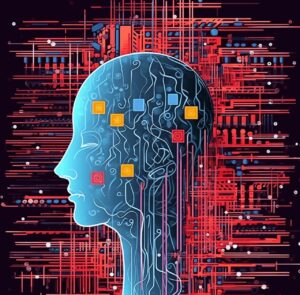
Virality is not validity. Emotional intensity is often a red flag. Pause before sharing. Shallow familiarity is vulnerable to deception. Deep knowledge even in one field trains one’s mind to detect inconsistencies elsewhere. When beliefs become one’s identity, any attempt for correction feels like an attack. A humble aspiration for learning protects one’s capacity to grow. Attention is the human’s most valuable currency in this age of deception. One must guard it carefully. Algorithms compete for it. AI predicts patterns in languages. It does not possess consciousness, intention, or moral responsibility. Treat AI as your assistant, not as the oracle.
In the Vedic era, sages and seers taught that an unexamined life is not worth living. Today, one might say – the unverified feed is not worth noticing and believing. To thrive in this era, seek truth over tribe; value understanding over speed; prefer wisdom over cleverness and protect integrity much more than online presence. Technology changes very fast but human nature does not. In this age of AI, those people will not thrive who collect and share more information. Only those would thrive who cultivate discernment. And discernment is not downloaded from the internet. It comes with patient observation and diligent practice.
Staying “sane” in the age of AI‑driven misinformation is less about calling out every lie and more about consciously designing a stable relationship with information through cultivated attention and balance of thought.