Jay Jagdev, Bhubaneswar, 1 July 2026
In line with the much-publicised NEP 2020, Odisha’s schoolchildren are getting a world-class education in one subject the syllabus forgot to list: Creative Fact-Checking. With thousands of mistakes across textbooks, we’ve accidentally launched India’s largest critical thinking experiment.
Who needs Olympiads when every math sum is a puzzle and every history date is a plot twist? Students get a shot of Nimbuda Nimbuda when the numbers get boring, just to keep the experiment joyous. Sarcasm aside, it has left the state embarrassed and the country stunned.
Double engine or Trouble engine?
Everyone’s trying to understand how low we had to sink to produce textbooks of such quality. It feels surreal. The incoherence reads like a Class 5 summer project done on a computer with no adult supervision. The government’s talent for engineering trouble has now turned inward — autophagy, you could call it.
Is this an isolated case of gross neglect bordering on willful apathy, or just our local tradition?
Try this: Name one government project, delivered by department staff, that’s actually high quality. Exclude VVIP pet projects with unlimited budgets or contractor-led showpieces. Or name one government service you can access without hitting a dozen barriers. You won’t need to look far.
Just look at a typical middle-class home. Dirty water? Buy a filter. No electricity? Buy an inverter/ generator. Polluted air? Buy an air purifier. No cooking gas? Buy an induction cooktop. Bad school? Go private or pay for tuition.
These were the services our taxes were supposed to cover. The State was supposed to deliver them. It doesn’t. It won’t. And we’ve accepted that as normal.
We slap a band-aid on systemic failure and call it a solution.
We’re probably the only people in the world who quietly pay for every government failure from our own pockets. Worse, we compete to buy the more premium version than the neighbour. We install booster pumps, drill illegal borewells, and set up private transformers — all to grab a bigger share of what should’ve been public.
The Indian middle class is the world’s largest municipal corporation.
We supply our own water, power, clean air, and education. The government just collects the subscription fee. Then it unabashedly calls the whole thing a “growing consumer economy” and taxes every RO, inverter, and purifier.
These aren’t signs of growth. They’re evidence of failure. And the State owes us answers.
India’s middle class has seceded from the Indian State. Not through protest or rebellion, but by quietly buying its way out of state failure.
That’s Shankkar Aiyar’s argument in Gated Republic (2020).
The State fails at basics — providing water, power, education, health, air, policing, and justice. Instead of fixing the system, the middle class builds a private replica. Install ROs because tap water is filthy. Buy inverters because the grid can’t cope. Pay school fees because government schools don’t teach. Hire security because the cops don’t show up. Each private fix is a “gate.” Stack them together and you get a Gated Republic — a country within a country.
You pay taxes to the State, then pay again to private providers just to live.
We don’t protest. We aspire. Then we just purchase.
The modern gated community is the logical endpoint. Why do we build them? Because they deliver what every city should – open spaces, parks, community halls, pools, libraries, recreation centres, safety, discipline, order.
We’ve privatised the very idea of a neighbourhood.
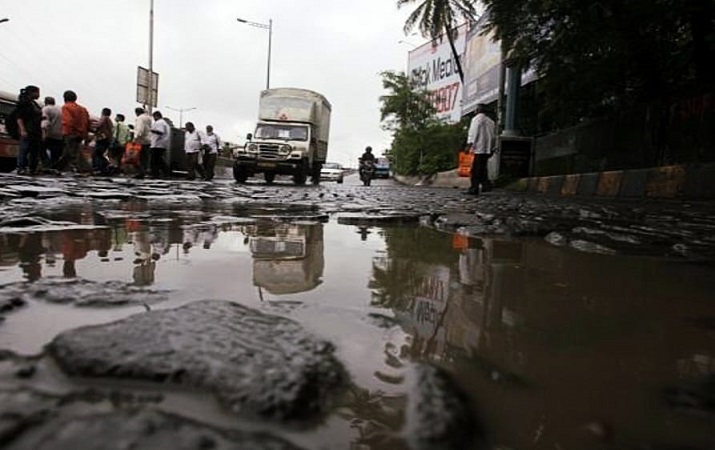
In the last few decades, we’ve fixed our offices. We’ve nearly fixed our homes. Even airports and railway stations are getting better through private partnerships. What still hurts is the space between them. Step outside your gate and you’re hit by chaos — badly designed roads, random speed breakers in every shape, potholes that qualify as modern art, unregulated traffic, unplanned sprawl. A road that’s “four-lane” on paper barely fits two cars. You’re seen dodging concave potholes and convex manholes, while both sides are choked by parked vehicles because some popular food joint runs out of a residential plot.
Whose job is it to keep public space in order? Public or private? We privatize public failures. We budget for the State’s gaps. Why?
Because protest is expensive and buying a solution is faster than fixing the system. Fighting the system takes leadership, time, energy, and the risk of retaliation by the state. We don’t have a culture of fighting for collective interest. We’d rather bribe the clerk to get our file moving than ask why the system is jammed. Individual optimization beats collective action every time. If my kid needs clean water today, a ₹15,000 RO beats a 15-year water supply reform. Taking the wrong side of the road feels fine if it helps you skip a traffic snarl. We’ve even legitimised bribing the pandas at Jagannath Temple for priority darshan. Culturally, we’re obedient. Questioning authority is frowned upon. The older generation still carries the memory of scarcity and oppression. For them, “at least we can buy it now” feels like progress. Avoiding confrontation became a survival tool — live today, to fight another day.
This privatisation of survival has two costs.
It depoliticizes failure. If you can buy water, you stop demanding working pipelines. The urgency to fix the system evaporates. It creates a two-tier nation. The poor stay stuck with the broken State. The rich and middle-class exit into another planet.
As Aiyar argues, this “private welfare state” is expensive and inefficient. The middle class burns income duplicating what taxes should already cover. And because the people with voice and resources opt out, the State never feels pressured to improve. Reform dies.
India’s most successful public-private partnership is between a failing State and a paying citizen. The State fails; you pay. The State fails again; you pay again.
It’s a downward spiral.
The State grows more inefficient and less accountable. Citizens aspiring to basic civic dignity build private bubbles and try to keep up with rising costs — often by earning through unfair means. Imagine the future this builds: a State that rewards inefficiency and corruption.
Ignoring public failure and building private solutions may fix the immediate problem; but the public and private cost is far larger in the long run.