Ritesh Misra, Mumbai, 11 August 2026
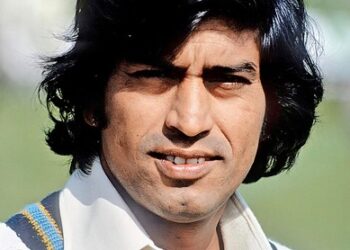
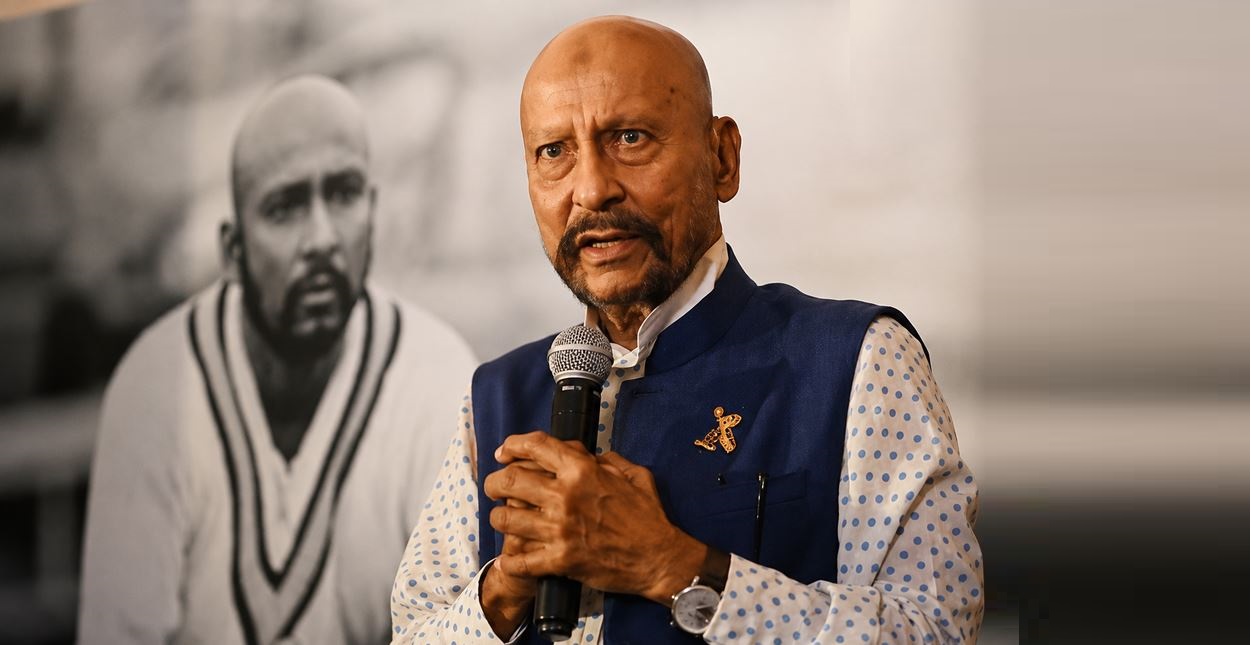
A popular quiz question is that the full name of Zaheer Abbas shares a name with another popular cricketer. Yes, his full name was Syed Zaheer Abbas Kirmani, and he was popularly known as Zaheer Abbas. Meanwhile, Syed Mujtaba Hussain Kirmani was commonly referred to as Syed Kirmani. They have one similarity. While Zaheer Abbas is one of the greatest cricketers from Pakistan, Syed Kirmani is one of the greatest cricketers from India.
Let us reminisce about the career of our World Cup winner, who is a recipient of the Padma Shri as well as the CK Nayudu Lifetime Achievement Award for cricket.
Syed Kirmani had a humble background. His father was a steno, and he grew up in a one-bedroom flat. While in Class 3, he used to walk 8 km one way to school and 8 km back, as his father could not afford a bus pass. His father wanted him to study and get a Government job, as sports were not very popular then. As Kirmani in his TEDx speech said, his father used to say, “Padhoge, likhoge, toh banoge nawab. kheloge, kudoge, toh ho jaoge kharaab” (If you study, you will become a big man, and if you run and play, youu will be nowhere). However, Kirmani says that while his father was strict and did not allow him to play sports, he did so on the sly, even though he could not afford canvas shoes, and participated in all games like football, hockey, and even the 100m and 200m sprints barefoot. Yet he says he won and gives credit to his genes for that, as his father had been a good athlete and his mother a good badminton player. His cricket selections, even for his school team and state school team, were wearing his uniform shoes and not sports shoes. What an amazing journey!
All the above details are from the Champion’s TEDx speech, which is available on social media.
Kirmani’s international career had to wait for a long time as the dashing wicket-keeper Farokh Engineer was the first choice of the selectors. However, Engineer also had to do Lancashire duty, and therefore both P. Krishnamurthy and Syed Kirmani were chosen, and the unlucky cricketer to miss out was the great Jimmy Amarnath. Kirmani toured England both in 1971 and 1974 but did not play tests. Krishnamurthy, however, played 5 tests in 1971 before he too had to wait, as Farokh was the undisputed first choice.
Kirmani had a long wait of almost six years and could not play in the 1975 World Cup either, as India went to the cup with a 12-member squad. He played test cricket after that, and only in his second test he did equal the world record of six victims in a test innings. Ironically, it was Krishnamurthy who was now an understudy to him, and while Krishnamurthy did not play any more test cricket, Kirmani went on to have a long and illustrious career. He, however, could not play the 1979 World Cup as he was dropped in favour of Bharath Reddy, who played just 4 test matches, and his only three ODIs were in the 1979 World Cup. Thereafter, Kirmani came back and held his spot in the team as the undisputed first choice wicket-keeper.
Kirmani’s first World Cup was in 1983, and he will always be remembered in history as the wicket-keeper of the first Indian team to lift the World Cup. It was a decisive win that changed the course of world cricket’s history. He was adjudicated the best wicket-keeper of the tournament. He also played a crucial role in the match, which could have signalled India’s exit, namely the match versus Zimbabwe, in which Kapil Dev walked in at 9-4, which later became 17-5, and then Kapil Dev scored 175 not out to take India to 266-8, which was enough for a 31-run win. What was Kirmani’s contribution? He was at the other end for an invaluable 24 not out in 56 balls, and they both had a 126-run unbeaten stand for the 9th wicket, which ensured India continued in the World Cup, and went on to lift it. In fact, it was his second consecutive terrific performance versus Zimbabwe in the 1983 World Cup, as he had participated with 5 dismissals, with 3 caught behinds and 2 stumpings, which was a world record performance, in the first league match against Zimbabwe.
In his TEDx speech, Kirmani gives an amusing insight into the dressing room and what he was doing at the 17-5 moment. He says that he did not expect to bat and was ready for a nice breakfast and a better shower when he heard someone saying, “Kiri, pad up”. He said he thought it was a prank and ignored it, but then a serious and anxious voice came, “Kiri, what are you doing, pad up, man? Looking out, he saw the score as 17-5, and he said with a chuckle that the biscuit fell off, and the towel fell off too! Luckily, no one was there in the dressing room. When he went out to bat, he says Balwinder Sandhu told him, “Arre Kiri, I dont want to bat yaar.” Of course, as things had it, he did not need to, and both Kirmani and Kapil had the match-winning unbeaten partnership.
In the final as well, Kirmani played a relatively smaller but highly important role. India were 161/9, and then Kirmani and Balwinder Sandhu (who had to bat this time) put on an invaluable 22-run stand for the last wicket, which took India to 183, which seemed a paltry score, but then Indian bowlers pulled off a famous win. Who knows? 161 may not have been enough, but 183 was enough.
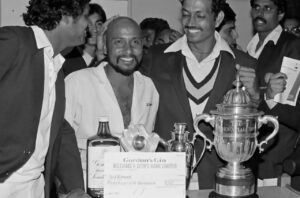
Kirmani’s value as a batsman can be best illustrated with a brief mention of his two test tons. The furst was versus Australia at the Wankhede Stadium in the 1979 series when Kirmani came in to bat as a nightwatchman after Gavaskar scored a hundred. Kirmani went on to bat for five hours, and after Yashpal Sharma, Jimmy Amarnath, and Kapil Dev were out, Kirmani, with 101 not out and Karsan Ghavri with 86 took India to 458/8 declared, which was enough for Dilip Doshi, Shivlal Yadav, and Kapil Dev to bowl India to an innings win. His second ton was also at Wankhede, which was against England in the 1984 series, and it was also in a win for India with centuries by Shastri and Kirmani, and a 235-run stand for the 7th wicket when India were in an iffy situation at 218/6. This test will also be remembered for Laxman Sivaramakrishnan’s 12 wickets in the match.
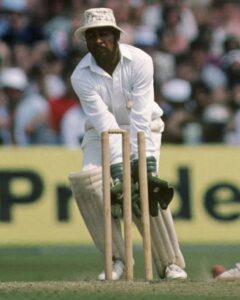
Kirmani was also a first class giant with almost 10000 runs, which shows that he was a dependable batsman who delivered the goods when required. However, he will always be remembered as a safe pair of gloves behind the stumps.
I would like to end by quoting from his TEDx speech about his advice to youngsters. He stated that in his time, there were the three legends of West Indies Cricket, Weekes, Walcott, and Worrell, and for him, they were of a very high level. He wanted youngsters to have three Ws in mind, namely Who am I, What am I, and Where am I. Thereafter, three Ds are important, which are Determination, Dedication, and Discipline. As per Kirmani, these build character, and there are no shortcuts to success; consistency is required for long-term success. He stated that the best way to progress is to introspect, look into oneself, and improve consistently.
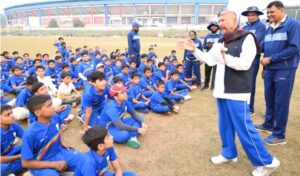
The editor of the English section of The Nirvik, Sobhan Kar, was a junior India level cricketer and had attended national coaching camps at Bengaluru under the then national coach, Hanumant Singh. Kirmani sir also visited the camp and had spoken to the young cricketers on a few things, especially about the three Ds that Sobhan remembers fondly.
Syed Kirmani Sir, you are our Icon. Very proud of you.