Ambika Prasad Kanungo, Bhubaneswar, 28 February 2026
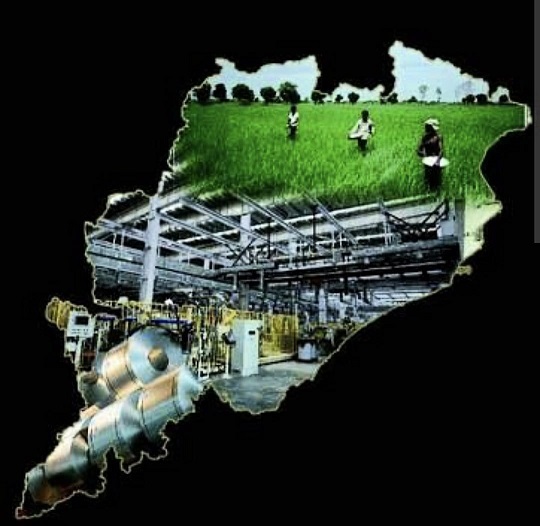
Odisha is frequently cited as one of India’s fastest-growing states, with rising industrial investments, expanding infrastructure, and a per capita income approaching ₹1.8 lakh. On paper, the macro story is encouraging. But beneath these averages lies a widening regional fault line. In districts such as Kalahandi, per capita income is estimated at barely ₹32,000 — a gap that reveals not just inequality, but structural imbalance.
A recent assessment by Public Response Against Helplessness and Action for Redressal (PRAHAR) draws attention to the persistent vulnerabilities in the KBK belt — Balangir, Koraput, Nuapada, Rayagada and Nabarangpur — long identified as Odisha’s most underdeveloped cluster. Despite decades of targeted packages and special area development programmes, the region remains locked in a low-income equilibrium.
The Structural Trap
Nearly 80% of the workforce in these districts depends on agriculture. But this is not high-value agribusiness — it is largely rain-fed, marginal, and seasonal farming with low productivity and limited irrigation coverage. Agriculture employs a majority of workers but contributes a much smaller share to the state’s Gross State Value Added. This mismatch reflects disguised unemployment — too many workers chasing too little output.
The economic consequence is predictable: low labour productivity, stagnant incomes, and limited household savings. Without productivity gains, there is no capital formation. Without capital formation, there is no structural shift.
Missing the Non-Farm Transition
Successful state economies move labour from agriculture to manufacturing and services. In the KBK region, that transition has stalled. Industrial clustering is minimal. MSME penetration remains shallow. Agro-processing — which could anchor rural value chains — is underdeveloped. Logistics bottlenecks and weak private investment further constrain diversification.
This absence of non-farm employment creates a vacuum. And labour markets respond in the only way they can.
Migration as Compulsion
Non-official estimates suggest around 60,000 seasonal migrants leave Kalahandi every year. Across Odisha, the number of migrant workers is believed to exceed 28 lakh. Migration in itself is not a problem — in dynamic economies, it signals mobility and opportunity. But distress-driven, circular migration tied to brick kilns, construction sites and low-wage urban jobs indicates something else: local joblessness.
Remittances help families survive. They smooth consumption. But they rarely create durable local assets or enterprises. In effect, labour exports substitute for local employment generation.
Welfare Without Wealth Creation
Public spending in Odisha has been robust in welfare delivery — food security, housing schemes, pensions and rural employment guarantees. These measures are essential safety nets. As PRAHAR president Abhay Raj Mishra argues, however, welfare sustains life; it does not necessarily create livelihoods with dignity or long-term stability.
The deeper challenge is employment elasticity. Growth that is capital-intensive and geographically concentrated can inflate state averages without absorbing surplus labour. Mining and large industrial projects raise output, but they do not always generate proportionate local employment multipliers.
The Policy Imperative
For Odisha to convert growth into inclusive prosperity, three economic shifts are critical:
1. Employment-intensive manufacturing: Particularly in food processing, textiles, forest produce and rural-based industries.
2. Agricultural productivity enhancement: Irrigation expansion, value-chain integration and market access reforms.
3. Regional capital allocation: Targeted infrastructure and industrial corridors within backward districts, not just around coastal growth hubs.
The broader question for policymakers is whether growth is being measured only by aggregate output or by convergence across regions. Rising averages can conceal widening disparities.
Odisha’s trajectory illustrates a national lesson: when development clusters in a few nodes, it risks creating a two-speed economy — dynamic at the core, stagnant at the margins. The state’s next phase of reform must focus not just on how fast it grows, but on who participates in that growth.
Because growth without inclusion is not sustainable expansion. It is an imbalance waiting to surface.