Ambika Prasad Kanungo, Bhubaneswar, 7 July 2026
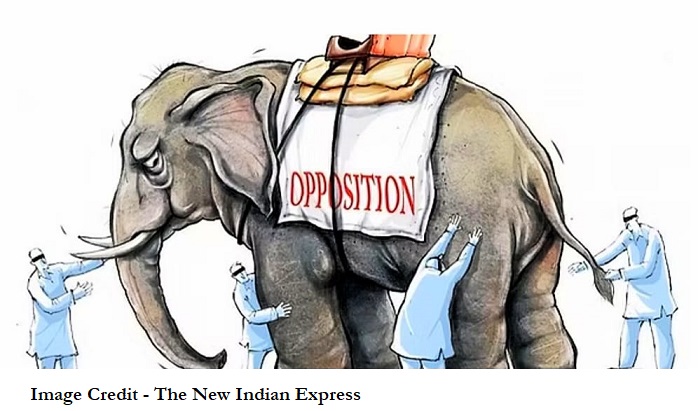
A healthy democracy does not depend solely on an elected government; it thrives on the presence of a strong, vigilant, and responsible opposition. While the government is entrusted with the responsibility of governance, the opposition serves as the institutional watchdog—scrutinising policies, exposing shortcomings, and compelling those in power to remain accountable. Constructive criticism is not an obstacle to governance; it is an essential pillar of democratic functioning.
However, democracy begins to lose its vitality when governments repeatedly commit administrative lapses and the opposition fails to question them effectively. The absence of meaningful scrutiny weakens public accountability and creates an environment where errors can recur without political consequences.
Recent developments in Odisha have raised concerns about the quality of governance as well as the effectiveness of the opposition. Around 56,000 students appeared for the NEET examination from the state amid allegations of a question paper leak that generated anxiety among aspirants and their families. At the same time, the discovery of more than 3,000 reported errors in government textbooks for students from Classes I to VIII exposed glaring deficiencies in academic content preparation and quality control. These mistakes, ranging from factual inaccuracies to language and printing errors, invited criticism and embarrassment for the state.
Questions have also been raised over government priorities. According to media reports, while many eligible elderly beneficiaries continue to face delays in receiving old-age pensions, the government’s decision to allocate nearly ₹2 crore for the “Pakhala Khia” celebration has drawn criticism from sections of society, who argue that welfare delivery should receive greater urgency than ceremonial expenditure.
These issues have fuelled a wider debate about governance under the two-year-old BJP government led by Chief Minister Mohan Charan Majhi. Critics argue that law and order has emerged as one of the administration’s weakest areas, with frequent reports of violent crimes and growing public concern over the state’s ability to ensure safety and security. While every government faces administrative challenges, the perception that corrective measures have been slow or inadequate has strengthened criticism of the administration.
Among the government’s setbacks, the textbook controversy has perhaps caused the greatest reputational damage. Education forms the foundation of a society, and errors in school textbooks undermine not only academic standards but also public confidence in state institutions. The widespread circulation of mistakes in textbooks has invited ridicule beyond Odisha and raised uncomfortable questions about the functioning of the education department, editorial oversight, and administrative accountability.
Ordinarily, such controversies would provide fertile ground for an energetic opposition to challenge the government. Yet, many political observers believe that Odisha’s principal opposition parties have failed to mount a sustained and effective campaign on these issues. This perceived silence has gradually eroded public confidence in their ability to hold the government accountable.
The Biju Janata Dal (BJD), which governed Odisha continuously for 24 years before losing power in 2024, has struggled to redefine its role as the principal opposition. Internal organisational adjustments following its unexpected electoral defeat may partly explain its subdued performance. However, many analysts believe the reasons run deeper.
The political relationship between the BJD and the BJP during the 2019–2024 period continues to shape public perception. Although the BJD consistently maintained that it remained equidistant from both the BJP and the Congress, its parliamentary record often suggested otherwise. Several important and controversial Bills introduced by the BJP-led Union Government received crucial support from the BJD in the Rajya Sabha, enabling their passage. This cooperation strengthened the perception that the two parties shared a pragmatic political understanding despite their formal independence. That perception became stronger when discussions emerged over a possible electoral alliance between the BJD and the BJP before the 2024 Assembly elections, although such an arrangement ultimately did not materialise.
Consequently, after years of political cooperation, the BJD now finds itself in the difficult position of confronting a party with which it had maintained cordial relations for much of the previous parliamentary term. Critics argue that this political baggage has diminished the party’s ability to function as an aggressive and credible opposition.
The Congress faces an even greater challenge. Despite remaining in opposition for over two decades, the party has struggled to establish itself as a viable alternative in Odisha. Internal factionalism, organisational weaknesses, and the inability to build a compelling political narrative have prevented it from effectively capitalising on either the anti-incumbency against the previous BJD government or the shortcomings of the present BJP administration. While the Congress has shown signs of revival in several other states under the leadership of Rahul Gandhi, those gains are yet to translate into significant political momentum in Odisha.
The consequence is a political landscape where the government encounters relatively limited institutional resistance despite facing criticism on multiple governance issues. Such an imbalance is not merely a problem for opposition parties; it has broader implications for democratic accountability. When governments are not subjected to sustained scrutiny, policy failures risk going unaddressed, administrative complacency can deepen, and public confidence in democratic institutions may gradually weaken.
Ultimately, the health of Odisha’s democracy depends not only on the performance of the government but also on the effectiveness of its opposition. Elections determine who governs, but democracy requires continuous accountability between elections. A government that governs without robust questioning, and an opposition that hesitates to challenge power, together weaken the democratic process. For the people of Odisha, the larger concern is therefore not simply which party occupies office, but whether the state’s democratic institutions continue to perform the roles that democracy demands. Effectiveness of its opposition is needed for good governance.