Dr Vijay Darda, Nagpur, 29 March 2026
In the ongoing conflict, Iran’s intent is absolutely unequivocal. It does not want to bow to the United States or Israel. It aims to keep targeting countries in the Middle East that host American military bases. But Dubai has no American military base at all so why is Iran attacking a peaceful city like Dubai? This question is on everyone’s mind these days, because Dubai is not merely a city, it is a modern-day ‘city of Kubera’, a symbol of immense wealth. Prosperity is embedded in every grain of this place.
In numerical terms, people from nearly 200 countries live here. Last year, around two crore international tourists visited Dubai. Almost everyone aspires to visit it at least once. Speaking of this desire, I am reminded of a Pakistani film titled “Chalo Dubai”! It was made in 1979 by director Riaz Batalvi at a time when Dubai had been independent from Britain for only eight years. One can’t help but wonder whether Batalvi possessed some prophetic instinct about the city’s destiny, sensing that it would rise to become a beacon of unimaginable wealth and opportunity. History seems to vindicate him. Today, lakhs of Indians and Pakistanis call Dubai home though, in a telling twist, the city has largely closed its doors to Pakistani visa seekers.
The question is how did a place that, about half a century ago, was known for warring tribes, fishing, pearl diving, and small-scale coastal trade, achieve such unprecedented development in just 50 years?
You might be wondering why, while discussing Iranian attacks, I have shifted to talking about Dubai’s remarkable growth. The truth is, this very rise is the reason behind the attacks and so it is essential to understand Dubai’s ascent first. Whenever we talk about the United Arab Emirates (UAE), Dubai is the first name that comes to mind.
But in reality, the UAE is a federation of seven emirates: Dubai, Abu Dhabi, Sharjah, Umm Al Quwain, Ajman, Fujairah and Ras Al Khaimah. The capital of the UAE is Abu Dhabi. All of these gained independence from Britain on December 1, 1971. The very next day, all except Ras Al Khaimah formed a union.
About two months later, when Iran seized parts of the Strait of Hormuz, Ras Al Khaimah also joined the UAE so that it would not remain vulnerable in the event of conflict with Iran. In this way, the dispute with Iran became linked to the UAE, and tensions between the two countries have persisted ever since.
Dubai’s extraordinary position today is undoubtedly the result of the far-reaching vision and leadership of Sheikh Mohammed. Remarkably, oil contributes only about one per cent to Dubai’s gross domestic product (GDP), yet he created conditions that propelled the nation rapidly along the path of prosperity. The approach is crystal clear: Come here, work, do business, eat, enjoy — but no nonsense. The rule of law is absolute. The country is tax-free and has outpaced others in ease of doing business. This is why Dubai has emerged as one of the world’s leading financial centres. Figuratively speaking, shiploads of gold arrive here, wealth from across the globe is parked in Dubai.
Investments flow in even from countries like Israel and China, often through intermediaries. The diamond trade, once thriving in Belgium and Israel, now finds its major hub in Dubai.
The United Arab Emirates, especially Dubai, offers something for everyone. Even cricket has found a firm footing here. Dubai continues to script an unparalleled story of astonishing construction and opulence, much like Europe once did. Landmarks such as Burj Khalifa, Palm Jumeirah, Dubai Marina, Jumeirah Lake Towers and Jumeirah Heights inspire awe. Palm Jumeirah, a man-made island, is particularly remarkable as it was constructed without the use of concrete or steel, using 120 million cubic metres of sand dredged from the sea.
The Dubai Metro is another unique project. In essence, whatever Dubai envisioned, it brought into reality. To attract top global talent, it has consistently done what is necessary by even allowing certain social freedoms for expatriates, such as unmarried couples living together. This reflects the UAE’s long-term, pragmatic outlook. It has maintained friendly relations with all countries and built grand mosques while also respecting secular values, as seen in permitting a Hindu temple in Abu Dhabi.
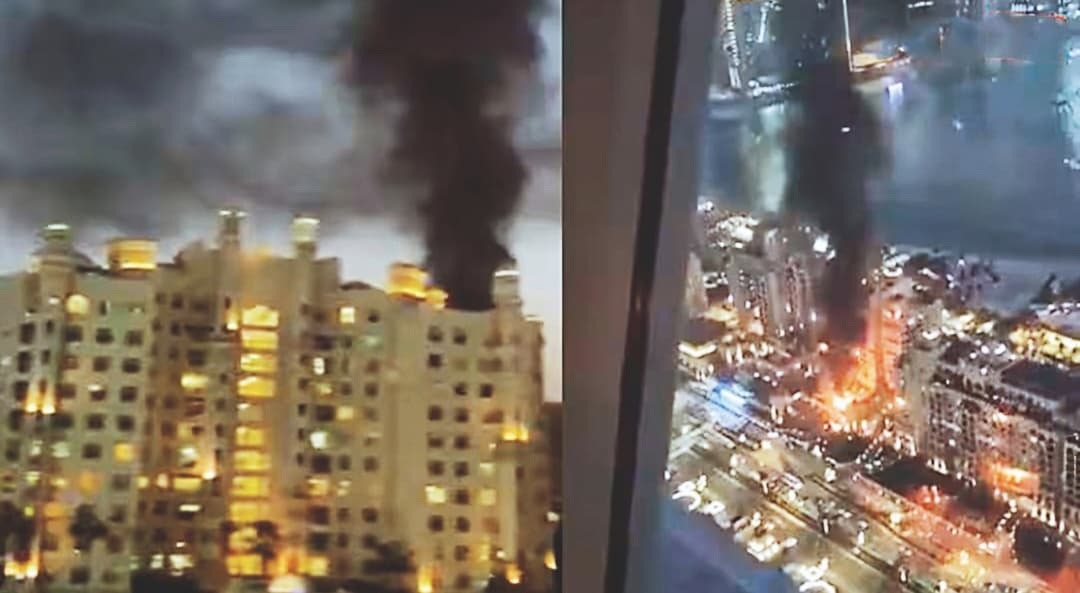
Now comes the central question: Why is Iran attacking the UAE, particularly Dubai? So far, Iran has launched more than 2,000 missiles and drones. Most have been intercepted, but several have struck Dubai. Explosions have occurred even at Dubai Airport, causing loss of life. The objective appears clear to shatter the perception of Dubai as a safe haven, spreading fear globally so that people and investors stay away. Will Iran succeed? Regardless of the outcome, its resolve seems firm: If you align with the United States, you will not be spared.
But consider the plight of those living under a barrage of missiles — their lives must be in constant distress. But who really thinks about the ordinary people? When giants clash, it is the fields that get trampled. Today, institutions like the United Nations and all those that speak of peace seem increasingly ineffective. The old adage ‘might is right’ appears to be playing out. If the United States claims to be the leader of the world, it must also act like one.