The Nirvik Bureau, Bhubaneswar, 22 Februry 2026
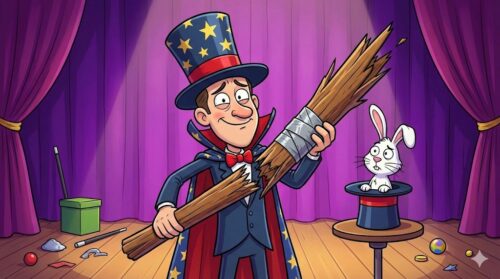
After Supreme Court clipped his tariff wings, Trump vows to rebuild “economic greatness” using duct tape, Section 301, and sheer willpower.
When Zeus lost his thunderbolt, historians say the weather improved. Washington is currently testing a similar hypothesis. Following the Supreme Court’s historic decision to strike down President Donald Trump’s global tariff powers, the humidity of outrage inside the White House rose by nearly 45 percent.
“This is an attack on freedom, commerce, and my right to improvise international law,” fumed the President, gripping a gold-embossed copy of The Art of the Deal as if it were the Constitution. “The Founding Fathers clearly wanted me to fix the trade deficit with China using pure instinct.”
Legal scholars disagreed. The Court calmly reminded the Commander-in-Chief that “Congress alone” can impose tariffs, effectively revealing that America’s balance of powers was not written in invisible ink.
Still, Trump moved quickly to regain control of global pricing destiny. Within hours, he announced fresh plans for a “temporary, permanent, limited, unlimited” 10% tariff lasting as long as necessary but no longer than forever. By breakfast, the figure had jumped to 15%, proving elasticity is not limited to economics.
The Art of Losing Leverage
Former Commerce Secretary Wilbur Ross described the decision as “unfortunate but market-friendly,” before admitting that Trump’s alternatives “have drawbacks.” Asked to elaborate, he recited the list:
- Section 122 – short shelf life.
- Section 301 – slower than a Florida recount.
- Section 232 – requires investigations that must first be investigated.
Economists now predict that Trump’s trade leverage resembles a rubber band stretched across a canyon—visible, impressive, and absolutely useless.
Meanwhile, Beijing has been seen practicing polite smirks for next week’s trade talks. Xi Jinping’s chief negotiator reportedly told journalists, “We welcome Mr. Trump’s new flexibility. It makes him bend easier.”
Checks, Balances, and Bylines
Capitol Hill Republicans, long allergic to economic complexity, suddenly rediscovered the virtues of congressional authority. Some even whispered the word “constitution” without flinching. Sixteen of them reportedly broke ranks after realizing tariffs made their imported golf carts more expensive.
Across the Atlantic, European officials celebrated the ruling with restrained schadenfreude. “We’re very happy to see American democracy functioning again,” said one diplomat, “and even happier to pay less for Kentucky bourbon.”
At the press conference that followed, Trump lamented, “Foreign countries that have been ripping us off are ecstatic.” He immediately announced new tariffs on “smugness imports,” though aides admitted the category was still being defined.
Revenge of the Rules
Behind the bluster, the episode exposes a genuine American dilemma: how to govern a game show host under rules written by Enlightenment philosophers. Trump insists the decision will not weaken his presidency. “We’ll collect more money than ever,” he predicted, “once we decide from whom.”
In the meantime, the global economy breathes easier—though cautiously, aware that tariffs, like sequels, always find a way back.