
The Nirvik Bureau, Bhubaneswar, 2 January 2026
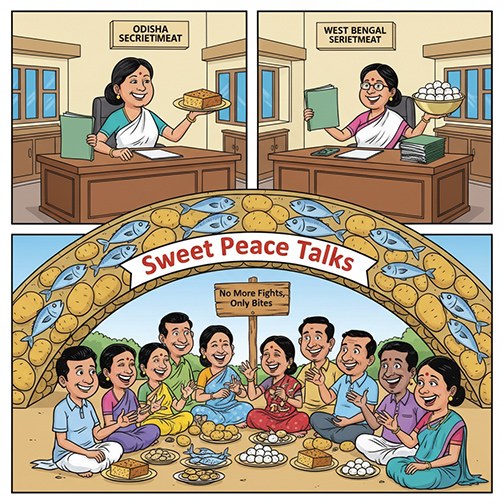
With women running Odisha and Bengal’s corridors of power, India wonders—can Chenapoda and Rasogolla finally call a truce? And will Hilsa and Sweet Potato exchange affectionate trade glances across the border?
It’s official—India’s eastern front has found its newest peacekeepers, and surprise: they’re not generals, but Chief Secretaries. Anu Garg now reigns supreme in Odisha, Nandini Chakraborty holds the fort in Bengal, and citizens are bracing for what can only be called matriarchal diplomacy with a side of syrup.
For decades, Odisha and West Bengal have found reasons to tussle. If it wasn’t about politics, it was about something far more serious—dessert. The Rasogolla War of 2017 left scars deeper than any cyclone. Odisha claimed invention; Bengal insisted on artistry. UNESCO, confused but polite, stepped in like that teacher who stops students mid food fight: “Children, everyone gets a certificate.”
Now the winds of change are blowing, and some optimists suggest the new bureaucratic duo might finally melt the sugar walls that divide the two states. Their first high-level meeting, rumor says, will be conducted not at a Secretariat, but over tea and tastings—“Chenapoda from my side, Rasogolla from yours.” Forget trade treaties; dessert diplomacy is the new foreign policy.
Meanwhile, traders are whispering about the revival of historic barter: Bengal sends Hilsa; Odisha sends sweet potatoes. It’s the subcontinent’s answer to yin and yang—fish and tuber, delicate and dependable. Economists are calling it “gastronomic GDP growth.” Chefs are calling it “menu integration.” Everyone’s just hungry.
But the satire wouldn’t be complete without the skeptics. “Two lady administrators?” says the seasoned cynic between sips of tea. “They’ll solve everything except traffic and Twitter outrage.” Another adds, “Next thing you know, Odisha and Bengal will sign a treaty: One Rasopoda Nation.” (Patent pending.)
Still, the hope lingers that this new feminine order of governance might bring more empathy to the administrative table—or at least stop people from being lynched over loyalties and labels. Maybe the real revolution will not come through manifestos, but through manners.
As we stand at this sweet junction of possibilities, one thing’s clear: India has entered the Governess Age, where efficiency has lipstick, and diplomacy smells faintly of ghee. And who knows—if all goes well, maybe someday crowds will chant not “Jai Jagannath” or “Jai Bangla,” but something truly universal:
“More Rasogolla for all!”
Till then, history will watch, tongue in cheek, spoon in hand.