Ritesh Misra, Mumbai, 11 April 2026
A few weeks back, Mumbai lost the 2025-26 QF to Karnataka. Chasing a tough 325 to win, the Karnataka team achieved it due to a century (130) by KL Rahul and a fighting, unbeaten 85 by left-handed middle-order batter Smaran.
They were helped immensely by as many as 5 dropped catches, three off Rahul alone, and one off Smaran. Now tell me, if you drop a catch of a test star or a talented Ranji Star won’t they make you pay? They did, and Karnataka went through to the Semi-final, while Mumbai was left wondering about the opportunity lost. Captain Shardul Thakur has openly stated that the dropped catches cost them dearly.
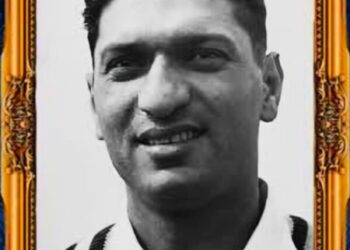
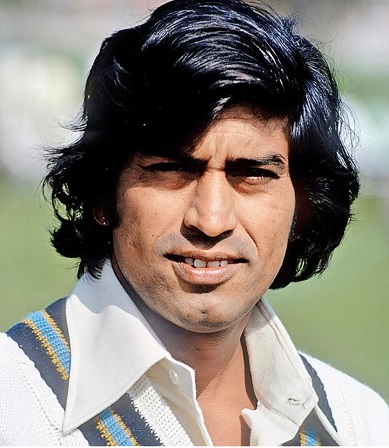
Let us now talk about someone who is remembered and will always be remembered for his fielding and his catching. No prizes for guessing that I am talking about none other than Eknath Solkar, who played just 27 test matches for India but held as many as 53 catches, which is a world record catch per test match for any player who has played a minimum of 20 test matches. This ratio of 1.96 is the highest in the history of the game.
Solkar was the first Indian test player to be born post Independence. He had a humble background, and his father was the head groundsman at Hindu Gymkhana, Mumbai. Solkar was a very promising cricketer since school days and was the captain of the Indian Schools team, which included Sunny Gavaskar and Jimmy Amarnath. He made his test debut in 1969 versus New Zealand, and from his very 1st test, he fielded at forward short leg. Without any protective gear like shin guards and a helmet, he made a mark for himself as a fielder, and it is unanimous that no one stood as close to the batter as he did. Not just that, he was famous for watching the ball till the very last moment. Due to this and his bravery and electrifying reflexes, he could take so many catches.
Indian cricket will always be remembered for having as many as four outstanding spinners at the same time, namely Bedi, Prasanna, Venkat, and Chandra, and all four of them are effusive in their praise for Solkar, whose fielding gave them confidence. Bedi is on record to have said, “We would not have been the same bowlers without him.” In a unique tribute Bedi called his close in catching intimidating. Venkat too called him a gutsy cricketer who fielded in positions which many would not accept. Sunil Gavaskar, who made a mark for himself as a slip fielder, has also always been in praise of Solkar and said that Solkar’s immense powers of concentration helped him pick up terrific catches. Later Gavaskar and Solkar would end up in the same apartment, the famous Sportsfield complex in Worli Mumbai, along with other stars like Ajit Wadekar, Dilip Vengsarkar, and Ravi Shastri.
The West Indies team was a force to be reckoned with, and some of his best performances came against the West Indians. His first overseas test was at Kingston, and at 71/5, he scored a gutsy 61 and had a 137 run partnership with Dilip Sardesai. In the 4th test at Bridgetown, his partnership with Sardesai helped to draw the match, which was essential in winning the series. When he passed away, Sardesai said, “This man gave his best to the team. He could bat, bowl medium-pace and spin. And his fielding was outstanding. He also kept one end up, supporting me in the Jamaica and Barbados Tests in the 1970s. And he was such a simple fellow.”
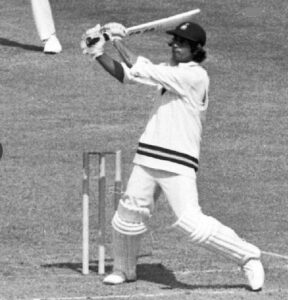
His only century in test matches was also against the West Indians, versus Clive Lloyd’s team at Madras. He was also not scared of or afraid of mega personalities, and he actually had told Sobers, “You play your game, I will play mine.” Similarly, he had told Geoff Boycott, “I will get you out, bloody”. He indeed did so, getting Boycott out 4 times in that series.
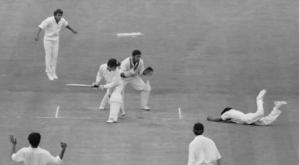
Both the aforesaid series count as India’s most famous wins, being the first ever away wins versus West Indies and England. In one of the wins, which was versus England in the 1971 Oval Test Match, his diving catch to get rid of Alan Knott is remembered fondly by stalwarts of that time.
Overall, Solkar played 27 tests in which he scored six 50s and a hundred. One of his roles in tests was taking the shine off the ball so that the spinners could come in and bowl. He played 189 first class matches in which he had 8 hundreds, 36 fifties, took 276 wickets and had five wickets in an innings as many as ten times. He was a valued member of the Mumbai Ranji team which won the Ranji trophy as many as 15 times in a row. He featured in as many as ten Winning Ranji campaigns.
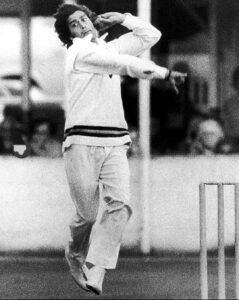
Eknath Solkar was beyond statistics. He will always be remebered for being the first player due to whom catching and fielding got the importance it deserves.
Sir, you are a true Icon of India!