Dhanada K Mishra, Hong Kong, 8 February 2026
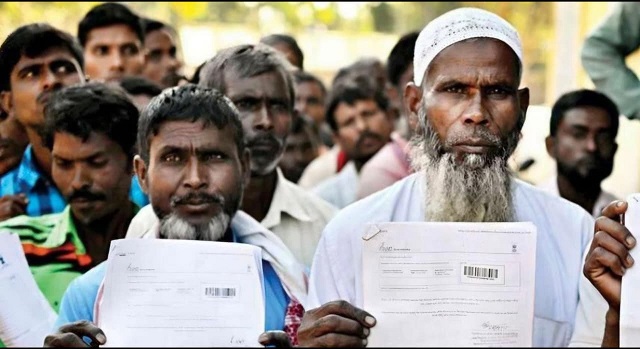
India’s pluralistic soul is under siege, and the warning shots are no longer subtle. Consider a chilling moment from late January 2026: Assam Chief Minister Himanta Biswa Sarma, addressing a rapt audience, equates the term “Miya” with Bangladeshi infiltrators and urges citizens to “go after them,” to “disturb” them until they flee. It’s not fringe rhetoric; it’s a sitting governor inciting open harassment of an entire community—families who have tilled Assam’s soil for generations. Home Minister Amit Shah amplifies the chorus ahead of state elections in Assam and West Bengal, framing “infiltrators” as an existential threat. Yet the statistics tell a different story: deportations were far higher before 2014 under Congress rule than during the BJP’s dozen years in power at the centre and in Assam—despite Shah’s control over Bengal’s porous border. The dissonance between rhetoric and reality only sharpens the edge of fear.
Voter rolls as political weapons
This is no isolated outburst. The Election Commission’s Special Intensive Revision (SIR) process, now unfolding in Assam, Bihar, and looming over Odisha, demands ironclad proof of citizenship from voters—disproportionately ensnaring minorities who lack decades-old documents. Assam’s chief minister boasts of striking 4-5 lakh “Miya voters” from the rolls, turning electoral hygiene into a tool of exclusion. Meanwhile, hate speech has metastasised: 1,318 documented incidents against Muslims and Christians in 2025 alone, 88 per cent in BJP-ruled states. What begins as words from podiums cascades into street-level boycotts, assaults, and viral videos of vigilante justice. In a nation that prides itself on democratic depth, these are not aberrations; they are symptoms of a deliberate majoritarian drift.
Odisha’s syncretic heart, now trembling
Odisha has long stood as a quiet rebuke to such division—a state where Hindu temples and Muslim dargahs coexist without fanfare, where markets hum with interfaith banter over steaming chai. Its secular ethos is no modern import but a legacy etched in stone and song. At the epicentre of this tradition lies the poignant tale of Salabega, the 17th-century Muslim devotee of Lord Jagannath whose life reads like a parable for our times.
Born to a Mughal officer father and Brahmin mother, young Salabega grew up straddling worlds, his frail body marked by illness. Drawn inexorably to Puri’s Jagannath temple, he poured his soul into Odia bhajans of aching beauty—only to be turned away at the gates. “Pita mo Mogal, beta mo Brahmani… Hindu na chhuen mo pani,” he lamented: My father a Mughal, mother a Brahmin—yet a Hindu won’t touch my water. Rejection fueled his art, not bitterness. Legend has it that during one Rath Yatra, the massive chariot ground to a halt, immovable until priests carried Salabega’s body near. The wheels turned. Today, the divine procession pauses annually at his samadhi on Puri’s Grand Road—a sacred acknowledgement that devotion transcends bloodlines and creeds.
This is Odisha’s gift to India: a reminder that spirituality blooms in unlikely hearts. Now, whispers of Bajrang Dal marches and social media-fueled rumours pierce this idyll, threatening a harmony centuries in the making.
Kabir’s timeless thunder against hate
If Salabega embodies lived syncretism, Kabir delivers its unsparing manifesto. The 15th-century weaver from Varanasi’s banks mocked the pious hypocrisies of his day with couplets that cut like a blade: Hindu pandits splashing futilely in the Ganga, mullahs preening under minarets—both chasing phantoms while God hid in the human heart. “One Ram, one Rahim; the same light in all,” he thundered, scorning rituals as empty shells and urging a spirituality rooted in compassion, not caste or conquest.
Kabir dodged death threats from bigots on all sides, his words a bridge across chasms of faith. In an era when political operatives stoke communal fires for electoral ash, his voice feels urgently contemporary. “If washing the body erased sin,” he quipped, “tanners would be saints.” Hatred, he warned, poisons the hater first—today’s purveyors of division included.
The peril when 20 percent lives in fear
India’s minorities—Muslims at 14 per cent, Christians at 2 per cent, Sikhs and others rounding out roughly 20 per cent—form the canary in the coal mine of our democracy. When they shrink from public life, trust erodes like monsoon mud. Neighbours become suspects; markets hollow out; children learn to code-switch their identities. Economies stutter as investment shies from fractured societies. Official statistics, massaged and spun through billion-rupee media blitzes, paint a glossy mirage—booming GDP amid spiking poverty, “world-beating” growth masking stagnant wages. But no ledger can fudge a mother’s hushed warnings to her son or the empty storefronts in once-thriving bazaars.
A nation halved by fear cannot stand tall. Its true strength lies in the quiet confidence of every citizen, from Bhubaneswar’s alleys to Bengaluru’s towers.
Gandhi’s legacy, tarnished abroad
Abroad, the damage festers. For generations, India traded on Gandhi’s image: the frail ascetic wielding truth and ahimsa against empires. Bollywood, yoga, and tech prowess burnished it further. Now, global headlines chronicle lynch mobs and legislative erosions, chipping away at that halo. Millions of expatriate Indians—in Riyadh’s compounds, Lagos’s markets, Toronto’s suburbs—navigate life as minorities themselves. A fresh atrocity video from home prompts sidelong glances at work: “Is that your India?” Their moral armor thins; remittances may flow, but pride ebbs. Tourism falters, partnerships cool, and the soft power once our envy curdles into cautionary tales.
Deepak Kumar: Courage in the mob’s shadow
Amid this gloom, beacons flicker. On Republic Day 2026 in Kotdwar, Uttarakhand, a 70-year-old Muslim shopkeeper cowered as a Hindutva mob bayed for “proof” of his Indianness—slaps landing, slurs flying. Enter Deepak Kumar, a local Hindu gym owner, burly and unyielding. He shoved through the circle and declared, simply: “My name is Mohammad Deepak.” Hindu first, Muslim surname—a two-word manifesto of defiance.
The mob erupted: “Traitor!” Threats followed—protests at his gym, online vitriol, bricks through windows. Deepak’s family trembled; his wife clutched the children close. Undeterred, he filmed the chaos, posted it online—“This is my India; come try me”—and watched #IStandWithMohammedDeepak ignite nationwide. Rahul Gandhi hailed him as fraternity incarnate; police cordons quelled the frenzy. Later, the shopkeeper embraced him, tears streaking a weathered face: “Beta, you saved my life.” One man, one moment, against the tide—proof that courage is contagious.
Artists echo this valour. A.R. Rahman voices quiet anguish; Naseeruddin Shah frets for his daughter’s safety. Backlash rains down—boycotts, trolls, “anti-national” barbs. Yet they speak, as Deepak acts.
A summons to reclaim India
This is a moral inflexion point. Right-thinking Indians—across faiths, regions, politics—must condemn it in the harshest terms: Restore the rule of law. Unleash agencies on lumpen elements, from Bajrang Dal shadows to BJP-enablers. No impunity.
Salabega teaches devotion without borders. Kabir demands spirituality sans spite. Deepak lives it, raw and real. When that 20 per cent walks fearless, India reclaims its stride—not through missiles or megaphones, but through the stubborn spine of its people. That’s the republic worth fighting for. Who will stand with them?