
The Nirvik Bureau, Bhubaneswar, 11 May 2026
When the balance sheet starts wheezing, the country is told to breathe less, buy less, and travel only in spirit.
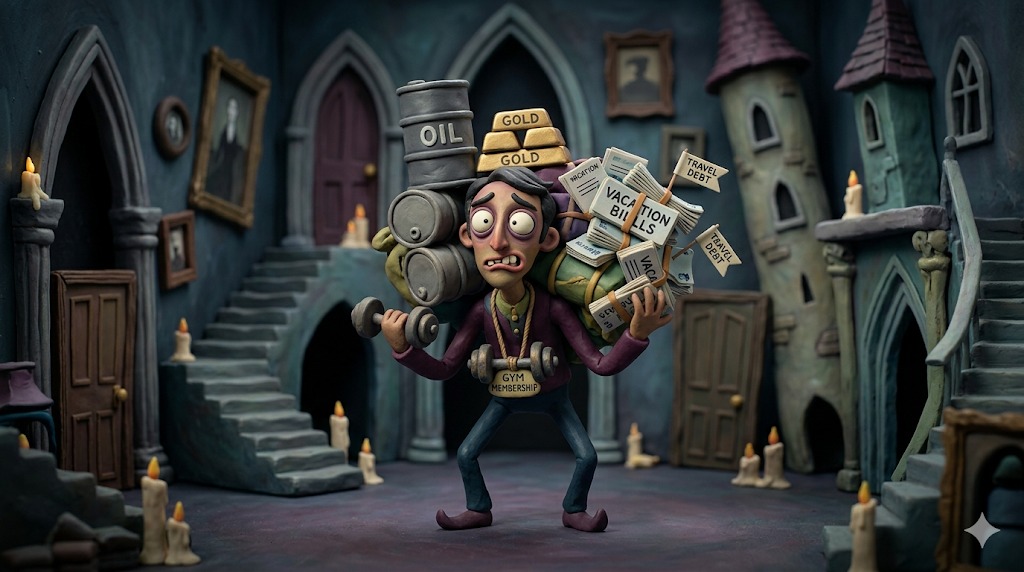
India’s current account deficit has once again entered the national conversation, which means one thing: the economy is being asked to behave like a disciplined monk while simultaneously carrying the shopping bags of a billionaire family picnic. Crude oil keeps arriving, gold keeps glittering, fuel keeps burning holes in wallets, and foreign travel continues to masquerade as a “necessary business trip.”
The arithmetic is elegant in the way a cracked windshield is elegant. We import what we burn, buy what we hoard, and visit what we later advise ourselves to avoid. Then we look at the deficit and act shocked, as if the nation has been caught spending after discovering the magic of credit cards.
The Great Import Tradition
Crude oil is the original problem child here. It enters the system with the confidence of a permanent guest and leaves behind nothing except invoices, inflation, and policy sermons. Every time global oil prices sneeze, India develops a fever, and the cure is usually a speech about resilience, self-reliance, and “long-term strategy.” This is a beautiful phrase, because it can survive even if the long term itself gets delayed.
Gold is not much better. India doesn’t just like gold; it treats it like emotional life insurance. Weddings, festivals, savings, blessings, prestige – gold has become the glittering answer to every insecurity. If crude oil is the nation’s unavoidable headache, gold is its self-inflicted jewelry addiction. We may complain about the deficit, but the moment a festival arrives, the country collectively remembers that financial wisdom looks better in a showroom.
Fuel: The National Paradox
Fuel prices deserve a special award for public relations. They rise quietly, then suddenly become a national mood. Everyone notices, everyone protests, and everyone still fills the tank because the bus stop is always “somewhere else.” Fuel is one of those rare things that can become costlier without changing its shape, smell, or attitude. A litre of petrol today has the dignity of a premium product and the utility of a mild heartbreak.
And yet, the response remains familiar: a concerned statement, a global explanation, and a domestic reminder that patience is patriotic. The citizen is expected to understand macroeconomics while pushing a bike with one hand and checking the wallet with the other.
Travel Advisory, But Make It Personal
Then comes the foreign travel angle, the modern ritual of pretending that each overseas trip is either diplomacy, development, or destiny. Business class is now where the nation’s strategic ambitions go to relax. There is always a conference to attend, a summit to address, or a “networking opportunity” that absolutely could not have happened over a video call.
The irony is delicious. We worry about the current account deficit while constantly generating a souvenir trail of hotel bills, airport fees, imported habits, and duty-free optimism. The country is told to tighten its belt, but the elite seem to have mistaken the belt for a first-class seat strap.
The Final Accounting
So the economy stands there, surrounded by crude, gold, fuel, and foreign flights, like a traffic policeman trying to regulate a wedding procession on a narrow road. Everyone wants growth. Everyone wants stability. Everyone wants cheaper fuel, stronger currency, low inflation, and high consumption – preferably all before lunch.
Until then, the nation’s financial strategy remains beautifully Indian: import the problem, celebrate the festival, book the trip, and then wonder why the bill arrived with interest.