The Nirvik Bureau, Bhubaneswar, 20 June 2026
How a titan of freedom graduated to scrapped station-wagon companion and municipal décor
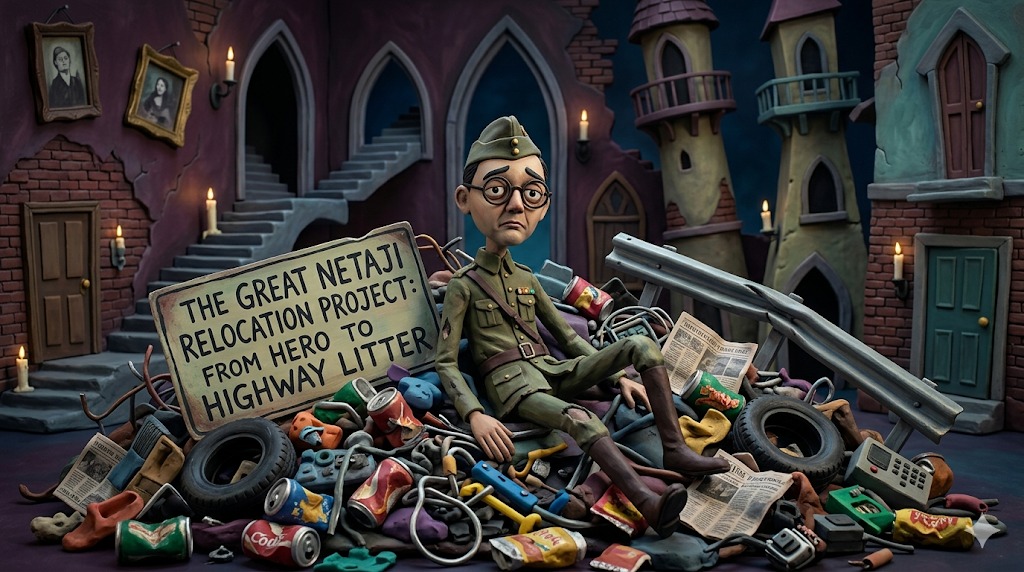
They told us progress required relocation. Progress, in this case, meant moving Netaji from the center of civic memory to a corner where he could appreciate modernity: the Bhubaneswar–Puri highway, next to a scrapped station wagon and the municipal corporation’s finest refuse. It is heartening to see our public institutions cooperating across departments – Heritage, Highway, Sanitation and Forgetfulness – to create a unified installation embracing indifference.
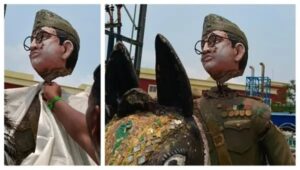
Once a proud equestrian, Netaji now practices the avant-garde art of partial collapse. The sculptor’s original attention to heroic posture is gone; now the statue offers a study in asymmetry. A broken neck lends a contemporary slant, broken hands provide thrilling negative space, and the bewildered expression reads like a state portrait of civic administration: stunned, but dignified. The garbage, empty bottles and detritus form an organic altar to our times: a living commentary curated by passersby who are mostly too busy to intervene.
The new Session Court building, inaugurated with pomp in December 2024 by dignitaries who understand symbolism deeply – the President, the Governor, the Chief Justice – sits gleaming at one end of the precinct. Opposite it, Netaji rehearses his new role as a lesson: monuments must earn their visibility. Apparently the price of survival in a democracy is relevance; statues that demand inconvenient upkeep will be downgraded to nostalgic scenery until public memory scrolls past them like a lagging feed.
Lawyers raised the issue, often. They raised it in courtrooms and corridors, between adjournments and chai. A pre-inspection for the Law Minister included the statue on the tour: a stirring moment of civic inspection where a minister was shown rubble and promised attention, which then promptly went on approved leave. The International Human Rights Commission filed complaints – because if eyes can watch the neglect without blinking, surely rights bodies should at least file a form. News channels sprinted there, microphones extended like accusatory fingers; the cameras even caught the statue’s best angle. The footage, though righteous, made roughly the same impact as air-conditioning in a morgue.
Veterans draped Netaji in cloth, because when institutions fail, citizens improvise ceremonies. Their ultimatum was crisply worded and historically consistent: demand, wait, repeat. The veterans’ cloth was not merely protection from dust; it was a scarf of shame thrown back at politicians who prefer anniversaries to action. Politicians, meanwhile, maintain a long-standing commitment to ritual. They celebrate Netaji’s birthday with the same zeal with which they celebrate amnesia: speeches, photo-ops, and ceremonial wreath-laying performed at a safe emotional distance from the actual object of reverence.
A small, admirable irony persists: the British, despite their best efforts, could not silence the titan of Indian independence. Our present custodians, with equal determination and better paperwork, have instead made him invisible by neglect – a surgical erasure performed by bureaucracy. It is less dramatic than a public trial, but no less effective.
So here stands our hero: half-sculpted, wholly ignored, a roadside essay in national priorities. Next time a minister passes by, perhaps they will notice the broken neck and remember to issue a press release promising action within 100 days. Or they will appoint a committee to study committees. Until then, Netaji will continue his new civic duty: teaching the nation, daily and without flourish, the eloquent politics of abandonment.