Dhanada K Mishra, Hong Kong, 8 December 2025
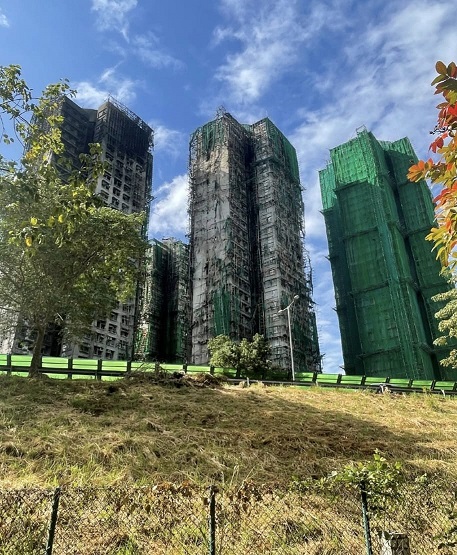
The catastrophic fire at Wang Fuk Court in Tai Po on November 26, 2025, stands as Hong Kong’s deadliest blaze in over seven decades, claiming at least 156 lives, injuring dozens, and leaving around 30 unaccounted for as of early December. Flames erupted around 2:51 PM from the podium base, rapidly climbing bamboo scaffolding and igniting highly flammable green mesh netting and polystyrene foam panels used in ongoing renovations, engulfing seven of the estate’s eight 31-storey towers housing over 4,000 residents, many elderly. This horror unfolded perilously close to our home in Pak Shek Kok, mere kilometers away, right next to the iconic waterfront cycle track along Tolo Harbour where I regularly jog and cycle, savoring the estuary views and distant peaks— a serene spot now forever shadowed by unimaginable loss. My wife, teaching at her school next door to our residence, witnessed the initial smoke plume rising, a sight that turned an ordinary afternoon into one of disbelief; no one in their worst nightmare could fathom such devastation striking modern, safety-conscious Hong Kong.
Human Stories of Survival, Heroism, and Community Resilience
Amid the inferno’s chaos—escalating from a No. 3 to No. 5 alarm within hours, with firefighters battling thick smoke and debris showers from collapsing scaffolding—extraordinary acts of bravery emerged. Filipino domestic worker Rhodora Alcaraz heroically rescued a three-month-old baby and its mother, suffering severe smoke inhalation herself, while other migrant workers from Indonesia and the Philippines, who bore disproportionate losses, shared tales of shielding neighbors and leaping from balconies. One survivor recounted huddling in a stairwell with family, gasping for air as flames blocked escape routes, only to be pulled to safety by rescuers who handled 346 distress calls, though one firefighter, 37-year-old Ho Wai-o from Sha Tin Station, tragically perished on site.
Communities across Hong Kong, including those near Pak Shek Kok, rallied swiftly: volunteers set up shelters in schools and community halls, distributing hot meals, clothing, and diapers; universities like PolyU deployed counseling teams and resources for the thousands displaced. Consulates extended condolence payments to affected helpers, while residents formed care networks offering temporary housing and emotional support, flying flags at half-mast and signing condolence books in a wave of solidarity. From our cycle track vantage, watching the smoke linger was a stark reminder of shared vulnerability, yet this outpouring highlighted Hong Kong’s unyielding community spirit amid grief.
Corruption at the Root in Hong Kong’s Building Renovation Sector
The blaze traced back to renovations by Prestige Construction & Engineering Co Ltd, a HK$300 million project mandated in 2016 for the aging 1983 estate but delayed until January 2024 amid resident cost objections—exposing substandard netting, non-fire-retardant tarpaulins, plastic cloths, and foam seals despite 16 labor inspections since July. Police arrested 15 for manslaughter, including directors and consultants aged 52-68, and 12 more in a corruption probe uncovering bid-rigging, inflated tenders, and subcontracting chains riddled with bribery syndicates siphoning millions.
Hong Kong’s building repair sector, despite stringent laws like the Buildings Ordinance and ICAC’s robust enforcement—including dismantling a $500 million scam ring—remains vulnerable to collusion, fake certifications, and lax private project oversight. Owners’ committees often fall prey to “vice-chairman syndicates” manipulating votes for cronies, while multi-layered contracts obscure accountability, as seen in prior fines totaling HK$30,000 against Prestige for breaches—penalties too lenient to deter. This pervasive graft, thriving even under ICAC vigilance, fueled materials that turned routine work into a deathtrap, a reality uncomfortably visible from everyday paths like our waterfront track.
Government Scrambles to Plug Critical Loopholes
In response, Chief Executive John Lee ordered a judge-led independent inquiry, interdepartmental probes, and three working groups for inspections, aid, and housing, alongside territory-wide scaffold audits fining non-compliant sites and accelerating bamboo-to-steel transitions. Special operations target fire-retardant compliance, with the Fire Services Department overhauling equipment reach for high-rises after ladders fell short midway up the towers. Loopholes exposed include inadequate material testing, fragmented supervision across departments, and slow mandatory inspection enforcement, prompting canceled public events to prioritize relief like cremation support and columbarium allocations.
This urgent reform race, including evidence seizures from the site, aims to avert repeats, but critics note it builds on long-known issues, underscoring the need for holistic lifecycle oversight beyond reactive fines.
A Tech-Driven Path Forward and Lessons for India
New technology can play an important role in avoiding such disasters in future. AI-powered, drone-based inspection system delivering lifecycle maintenance management with high-res thermal imaging, real-time defect detection and continuous remote facade monitoring—eliminating risky scaffolding and human bias. For estates like Wang Fuk Court, it flags issues early through ISO-compliant audits, ensuring material integrity and compliance without the corruption-vulnerable tender processes.
Developing nations like India, where similar graft plagues dense urban housing, can draw vital lessons: mandate tech-transparent inspections, enforce stricter standards, and foster community oversight to mirror Hong Kong’s post-tragedy push. The latest tragedy in a Goa night club that cost more than 25 lives is a case in point.
The Tai Po fire has forced me to confront an uncomfortable truth. As a civil engineer with over 25 years bridging academia, consulting, and innovation, I’ve spent my career believing that good design protects lives. Yet Wang Fuk Court has shattered that illusion—infrastructure alone cannot save us. What failed wasn’t the building’s bones, but its soul: the human connections that bind communities together. Even as we speak 13 families are yet to be traced from the Wang Fuk Court! When we engineer build structures, we safeguard lives. When we engineer isolation—through architectural design that discourages interaction, through Owners’ Committees that remain distant, through facility management firms that operate without resident input—we inadvertently engineer apathy. Neighbours become strangers. Safety lapses go unreported. Complacency calcifies into disaster.
This tragedy demands more than technical reforms. We need systemic change rooted in human connection. Communities must reclaim their stake in building safety. Owners’ Committees and residents must unite, not as administrators and occupants, but as stewards of shared space. Facility managers must see themselves as servants of the community, not merely custodians of liability.
Each of us must do better. For engineers like myself, this means designing not just safer structures, but spaces that invite vigilance and foster belonging. For residents and property managers, it means seizing the responsibility to know your neighbours, to question anomalies, to advocate for maintenance and accountability.
Let this tragedy become Hong Kong’s wake-up call—and a beacon for the world. The systems that failed at Wang Fuk Court exist in high-rises across Asia, Africa, and beyond. If Hong Kong can pioneer integrated reforms that marry rigorous structural standards with community resilience, we offer a blueprint for sustainable, life-affirming architecture everywhere.
The work begins now, on our waterfront paths.