The Nirvik Bureau, Bhubaneswar, 11 June 2026
How one country’s knack for dramatic mistakes turned global leadership into a cautionary tweet.
The United States used to be that guy at the party who owned the stereo, knew the best people, and could always get a table. Now it’s the same guy standing outside the VIP rope, phone out, desperately refreshing Truth Social and whispering, “Someone, anyone, please say something that makes me look like I have a plan.”
Once upon a recent decade, America strutted through West Asia with the confidence of a man in a suit stitched by NATO. Then it fell in love with theatrics – a romance novel of late-night phone calls, bad deals, and enthusiastic meddling. The plot twist? Its leading role was co-written by a guest star who kept ignoring the director – and the director kept funding his wardrobe.
The centerpiece of this tragicomedy is a foreign policy that treats restraint like a snooze button: noble in theory, impossible to find when the single function you actually know is “press send.” Iran, surprisingly tired of being cast as the brooding villain in a 21st-century revenge thriller, decided to stop being patient and start being punctual. Mojtaba, Iran’s newest headliner, apparently read the script and threw it in the compost. He ordered an encore performance with fewer apologies and more missiles. Cue the Strait of Hormuz drama: the stage where global oil prices get choreography lessons and diplomats practice the delicate art of apologizing without looking apologetic.
Backstage, the usual ally thespian, Israel, performed with unblinking commitment to escalation, apparently convinced that plot twists mean more screen time. Calls from the U.S. President descended into the kind of expletive-laden pep talks normally reserved for football coaches and malfunctioning espresso machines. “What the f— are you doing?” he reportedly asked, which, in diplomatic prose, translates to “please stop.” For a moment, the world held its breath – partly out of suspense, partly to see if the leader of the “free world” remembered he had any power left to flex.
Alas, power had become an accessory the administration wore only when it matched its public image. American aid became the catch-all answer for everything: diplomacy, deterrence, and domestic polling boosts. Money flowed like a parental allowance to an adult child who insists they’re saving for a house but keeps buying fireworks. Netanyahu, flush with that generosity, treated U.S. leverage as decorative rather than functional – a magnet for applause, not a leash.
Meanwhile, rivals lounged in the balconies, sipping tea and updating their strategy docs. Russia and China, who historically enjoy chaos like sommeliers enjoy tannins, adjusted their ties and checked their spreadsheets. “Thank you,” they might have said, had they been invited. Instead, they invested where America’s credibility used to hold court: deals, influence, and the smug comfort of being the adult in the room.
The moral, if anyone still believes in morals, is one politicians never learn on a first reading: you can’t forever outsource backbone to speeches and expect someone else’s restraint to be your foreign policy. If America wanted to remain the country that others took seriously, it could have tried subtlety, consistency, and the rarest of weapons in modern politics – foresight. Instead, it chose spectacle, then acted surprised when the audience started booing and the critics praised Iran, Russia, and China for their “unexpected virtuosity.”
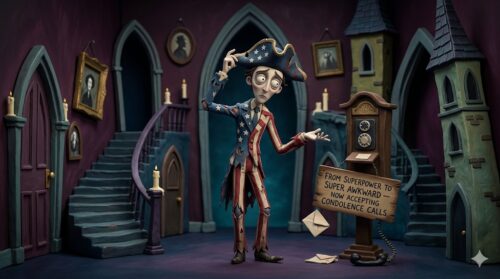
So here we are: a superpower reduced to updating its status and hoping someone sympathetic likes the post. It’s a new era of global politics – one where the loudest megaphone doesn’t win arguments; it just makes everyone else put earplugs in and talk to China instead. Want to console America? Send flowers, an op-ed, and maybe a map. It seems to have misplaced its bearings somewhere between bravado and bad advice.