Dr Manoj Dash, Bhubaneswar, 2 August 2026
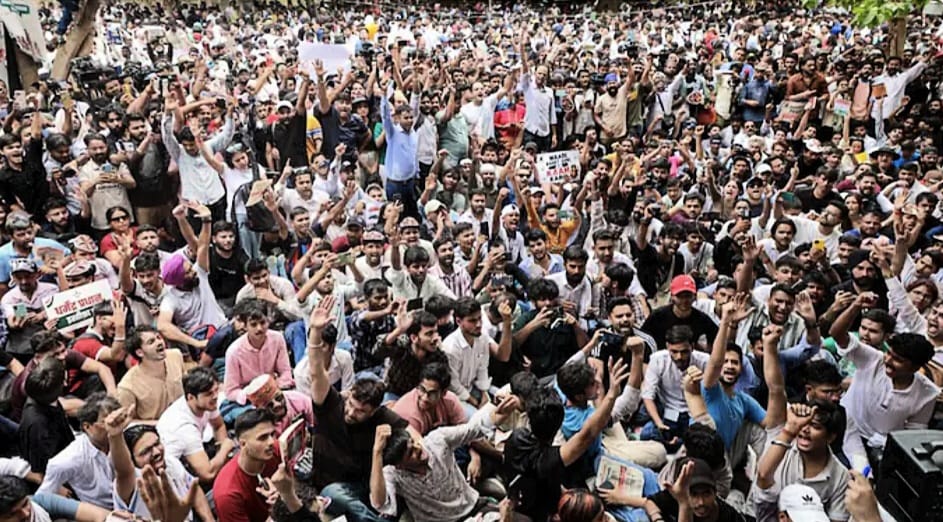
In the summer of repeated examination cancellations, thousands of students gathered outside Jantar Mantar carrying admit cards instead of party flags. Their slogans were not about ideology, religion, or regional identity. They demanded something far simpler: that the state conduct examinations honestly.
For decades, the dominant political apparatus relied on a predictable playbook—channelling electoral energy through identity arithmetic, regional patronage networks, and polarizing cultural narratives. However, India’s youth demographic—representing the largest cohort of young people in the world—is increasingly rejecting these traditional frameworks. Having matured amidst hyper-competitive labour markets, systemic delays in public recruitment, and chronic irregularities in standardized testing (from NEET to state-level civil service examinations), young citizens view formal party politics through a lens of profound disillusionment.
This trust deficit has triggered a fundamental shift in how young Indians engage with democracy. Rather than retreating into political apathy, India’s youth cohorts are pivoting toward non-partisan, decentralized, and issue-driven mobilization. When thousands assembled at protest sites or public spaces throughout the country, they gathered not under partisan flags, but under a shared demand for accountable governance and institutional integrity.
A Crisis of Political Faith
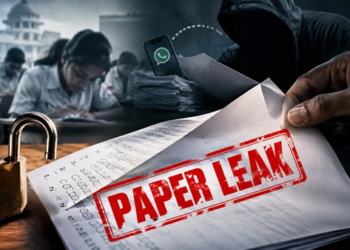
Across the political hubs of Delhi, Patna, Lucknow, and Mumbai, a stark contrast in democratic participation has emerged. On one side stand the heavily choreographed rallies of traditional political parties—distinguished by massive billboards, well-funded logistics, and rehearsed talking points. On the other stand spontaneous gatherings of thousands of young students. Equipped with handwritten placards, satirical memes, and shared outrage, these young citizens fill the streets and public squares in response to recurring exam paper leaks, recruitment delays, and administrative failures. By organizing around concrete grievances—such as paper leaks, administrative corruption, and stagnant job creation—they have detached civic action from party allegiance.
The significance of this evolution lies in its universal, cross-cutting appeal. Education and employment-linked examination integrity are among the few crucial issues in Indian public life that directly affect families across every socio-economic tier, regional identity, and community line. A cancelled entrance test or a compromised recruitment drive inflicts equal hardship on an aspirant in rural Bihar, a small-town candidate in Madhya Pradesh, or a student in Chennai. By centring their struggle on constitutional rights to fair opportunity and transparent governance, the recent student-youth joint movement has established a distinct form of moral authority—one that challenges established political parties to prove their relevance through functional delivery rather than electoral rhetoric.
Education: The Anatomy of an Unprecedented Catalyst
Historically, national electoral strategies in India have revolved around identity politics, regional coalition-building, and broad welfare delivery. Education, while routinely listed in manifestos, rarely operates as the primary rallying cry for nationwide voter mobilization. The recent surge in student agitation marks an important shift: education has transformed from a passive policy discussion into an active political issue.
This shift is driven by deep aspirational pressure. For millions of families, public education and competitive recruitment examinations—such as NEET, UGC-NET, and state civil services—are not merely academic milestones. They represent the primary pathway for social mobility, economic security, and dignified employment. When administrative oversights result in paper leaks, cancellations, or years of litigation, the impact goes beyond lost study time. It disrupts family finances, creates severe mental health burdens, and stalls life trajectories.
Furthermore, education serves as a unifying cause. Unlike conventional political issues that can divide voters along caste, religious, or regional lines, the integrity of educational institutions affects families across socio-economic spectrums. A compromised entrance exam or a delayed recruitment drive impacts students in rural towns and urban centres alike. By focusing their cause on the right to fair examinations and transparent governance, youth-led agitations have built a broad base of public legitimacy that traditional party youth wings often struggle to establish.
The Mechanics of Modern Mobilization
The mechanics of contemporary youth-led agitations differ fundamentally from traditional political rallies in India. While conventional party mobilizations rely heavily on cadre hierarchies, financial outlays, and top-down directives from high commands, modern student and youth movements operate as decentralized, peer-driven networks.
Several key elements characterize this shift in strategy and communication:
- Non-Partisan Authenticity: By deliberately maintaining distance from established party affiliations, youth movements preserve their moral authority. When citizens observe students assembling without political banners, public perception views the protest not as a political power struggle, but as a genuine demand for administrative accountability.
- Digital-First Coordination: Platforms like Instagram, Telegram, and X allow rapid, horizontal coordination. Rather than relying on party whips, information regarding protest venues, legal aid, and safety measures circulates instantaneously across student networks.
- Satire as Political Vocabulary: Contemporary youth movements frequently utilize humour, satire, and pop-culture references to express dissent. Creative branding—such as transforming political dismissals into symbolic slogans—helps lower barriers to entry for young citizens who feel alienated by formal political rhetoric.
- Constitutional Framing: Rather than framing demands in narrow ideological terms, youth leaders consistently anchor their claims in constitutional rights—specifically the right to equality of opportunity, transparent governance, and institutional fairness.
The Road Ahead: Pressure Group or Political Alternative?
As student and youth-led movements continue to challenge the status quo, their long-term impact on Indian democracy is likely to unfold along two primary trajectories:
- Scenario A: The Strategic Pressure Group: Even without contesting elections directly, organized youth movements function as effective policy pressure groups. By keeping issues like examination integrity, employment delays, and education budgets in the national spotlight, they compel mainstream political parties to modify their agendas. In this model, the power of youth movements lies in their ability to set the terms of political debate and hold governing institutions accountable through sustained public focus.
- Scenario B: The Emergence of a New Political Force: Alternatively, continued administrative inertia could catalyse the formation of explicit, youth-focused political platforms. Such entities would aim to reframe governance around service delivery, institutional transparency, and economic mobility rather than traditional identity math. Whether through independent electoral platforms or regional coalitions, this path represents a shift from protesting policy to enacting it.
Redefinition of the Indian Democratic Paradigm
The declining faith in traditional party politics among young Indians should not be misread as political cynicism or civic apathy. Rather, it marks the emergence of a more demanding, outcome-driven form of democratic engagement. By elevating public examination integrity, transparent recruitment, and educational infrastructure into nationwide rallying cries, youth-led movements have fundamentally disrupted the conventional rules of political mobilization.
This evolution imposes three lasting structural shifts on the future of Indian democracy:
- From Identity Arithmetic to Outcome-Based Citizenship: For decades, political strategists viewed young voters primarily through the prism of inherited social identities—caste, religion, and regional ties. The recent wave of education-first protests proves that economic survival and institutional fairness can transcend these traditional divides. Gen Z and young Millennials are increasingly viewing governance not through emotional or ideological loyalty, but as a performance contract.
- The Disruption of Party Gatekeeping: Mainstream political parties no longer hold a monopoly over public mobilization. With digital tools enabling flat, decentralized coordination, youth collectives can assemble thousands of citizens in real time without relying on party funding or high-command approvals. This shifts the balance of power, forcing state authorities to respond directly to organic public sentiment rather than filtered party narratives.
- The New Burden of Proof for Political Parties: Whether these youth movements remain external pressure groups or eventually evolve into formal electoral alternatives, the baseline for political legitimacy has changed. Parties can no longer pacify the country’s largest demographic with election-season manifestos or symbolic youth-wing appointments. To win the trust of India’s young electorate, political leaders will be forced to deliver measurable, institutional results.
India’s next political realignment may not begin in its Parliament or in party headquarters. It may begin in examination halls. If the credibility of public institutions continues to erode, the politics of aspiration may increasingly replace the politics of identity. In that transformation lies one of the most consequential democratic shifts of twenty-first-century India.