
Dhanada K Mishra, Hong Kong, 9 September 2026
Last week, I asked my computer to find every project report I had written since 2010. It didn’t just search — it scanned folders, read metadata, grouped files by client, flagged duplicates, and handed me a clean inventory in ten minutes. That would have taken me two days.
For someone who has spent over twenty years accumulating digital debris—reports, drawings, photographs, proposals scattered across old laptops, backup drives and cloud accounts—this felt like a superpower. The information always existed somewhere. The question was always: where exactly?
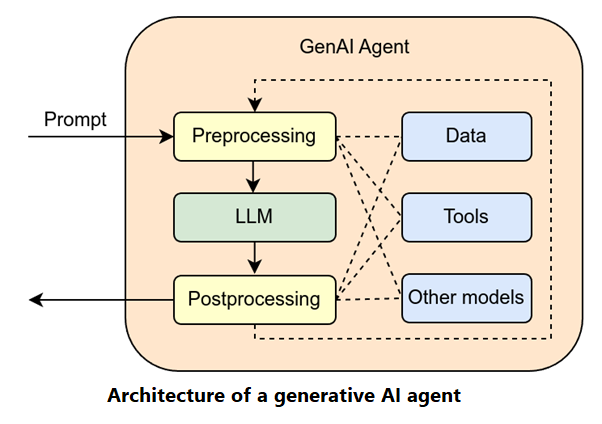
What made this possible was not a smarter search engine. It was agentic AI—AI that doesn’t just chat, but acts, plans, checks its own work, and keeps going until the goal is met.
OpenAI’s recent launch of GPT-6 Astra has been called the start of the “AGI era” by the company’s own president. Not everyone agrees—the team behind the ARC-AGI benchmark OpenAI cited scored Astra far lower under neutral testing and explicitly rejected the AGI label. But whichever side of that debate you land on, the underlying shift is real: AI is moving from a tool that talks to a tool that works alongside us. And that changes things, whether you’re building a bridge in Bhubaneswar, running a shop in Cuttack, teaching in Sambalpur, or studying for an exam in Berhampur.venturebeat+2
From Chatbot to Teammate
Most people meet AI as a chatbot: you ask, it answers. Agentic AI goes further. Tell it, “Review these files, find what’s missing, draft a report, tell me what to check before I send it”—and it breaks the task into steps, uses the right tools, inspects its own results, and comes back with something more complete.
It’s the difference between asking for directions and asking someone to walk with you, watch your step, and warn you before you go wrong. I’ve been using exactly this kind of setup in my own work, choosing tools that balance capability with privacy and cost. The human stays essential—just no longer stuck doing every repetitive first step alone.
The Task I Had Been Dreading
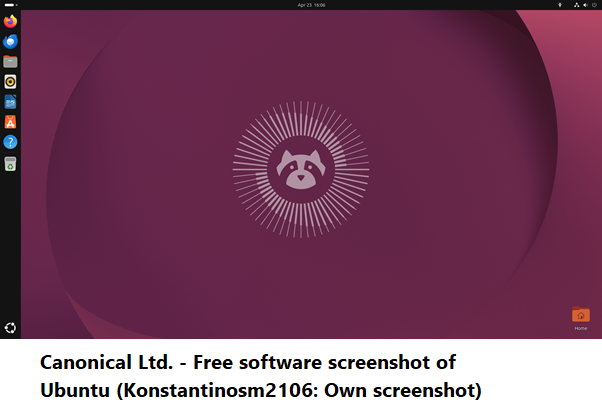
A more personal example taught me what this really means. My old laptop was ageing—slow, crash-prone—and I knew I should switch it to Ubuntu, the free operating system that can revive old hardware. I never did it. Partitioning the disk, backing up everything, hoping the Wi-Fi driver would survive—the fear of one wrong click wiping years of photographs kept me delaying for over a year.
This time, I asked an AI agent to guide me through it. It didn’t dump instructions—it asked questions first: how much free space did I have, did I have a backup drive, what should be included. At the riskiest step—partitioning—it stopped me cold: “This is critical. Confirm before you proceed.” Afterwards, it checked the Wi-Fi driver, the printer, and verified file integrity before restoring anything.
Twenty minutes later, I had a faster laptop and a task finally done—safely, by my own hands, with an AI reducing not the effort, but the fear of failure. That, I think, is agentic AI’s real gift: turning a daunting, solitary problem into a guided, manageable one. A student setting up code for the first time, a small trader in Puri digitising accounts, a teacher building an online class—the barrier is often psychological, not technical. AI that patiently walks alongside removes that barrier.
Not Only for Coders, Not Only in English
You don’t need to be a programmer to use this. Tools like Perplexity Computer take a high-level goal and coordinate AI agents to complete it. Indian startups such as Sarvam are building agentic tools with support for Indian languages, which matters enormously for Odisha, where English fluency should not decide who benefits from AI. Efforts like Dr Priyadarshan Patra’s AI Scholar—currently in testing—point to another promising model: AI that teaches through Socratic questioning with strong guard rails, pushing students to reason rather than simply handing them answers.
For privacy-conscious users, local AI tools like Ollama run models entirely on your own machine, keeping sensitive data—engineering files, business records, personal archives—off the cloud entirely.
The Cost We Don’t See
None of this is free of consequence. Data centres consumed roughly 1.5% of global electricity in 2024, a figure the IEA expects to more than double by 2030. Water use could climb from 560 billion litres a year to as much as 1.2 trillion by 2030. For an India already managing water stress in many states, this is not a distant Silicon Valley problem.iea+2
But it isn’t inevitable. Models are getting more efficient per task even as usage explodes. The real choice ahead is between two paths: endless mega data centres and centralised control, or lighter models, local computing and renewable power. Odisha’s students shouldn’t just consume AI built elsewhere—they can help build the efficient, decentralised alternative.
The Safety Question
Agentic AI can browse, code, and transact—which means it can also err badly: paying an invoice twice, sending a confidential file to the wrong person. These are near-term risks, not science fiction. Capability without governance is genuinely dangerous, and India, with its scale and digital ambition, has a real stake in shaping global AI safety norms rather than merely adopting them.
Learn to Lead AI
My message to Odisha’s Gen Z: don’t compete with AI at repetitive work—learn to lead it. Use it to accelerate learning, not replace thinking. The future belongs to those who ask good questions, verify facts, and take responsibility for what AI produces.
New roles are emerging: AI workflow designer, agent supervisor, local-language AI builder, AI safety specialist. Odisha’s young people should aim not just to fill these roles, but to build the companies around them.
Whether or not GPT-6 Astra truly marks the start of AGI remains contested. What’s certain is that AI has started acting, not just talking. The real question for Odisha isn’t whether this change is coming—it’s already here. It’s whether we use it to build something wiser, lighter, and more accountable for the generations ahead.