
Dr Manoj Dash, Bhubaneswar, 21 November 2026
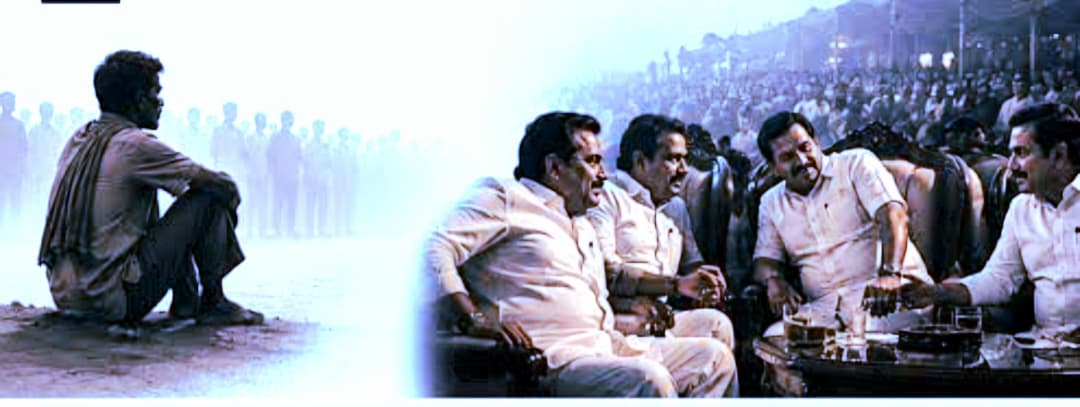
The greatest tragedy of Indian democracy is not that voters choose poorly; it is that many of the best leaders never make it to the ballot. We are told elections reward merit. In practice, party gatekeepers and moneyed campaigns reward compliance and capital. The result: legislatures filled with the affluent and the agreeable, while independent, capable voices are filtered out long before voters get a say.
The loyalty filter: how parties pick conformists
Across India, candidate selection is dominated by party high commands, not local members. Tickets go to those who will amplify the leadership’s line, not those who will question it. In a climate obsessed with message discipline and “brand safety,” the straight-talking, policy-curious leader is treated as a liability.
This is not an accident; it is a design feature. When allegiance to the leader supersedes duty to the constituency, legislatures stop being arenas of debate and become echo chambers of consent. The sharpest minds are weeded out early—before the public ever gets to judge them.
The money filter: the invisible tollbooth to contest
Even if a rare independent thinker clears the loyalty test, they collide with the second barrier: cost. Modern campaigns demand expensive digital PR, consultants, travel, and optics. India’s candidate expenditure caps exist, but party-level spending is far less constrained, creating an asymmetry that drowns out grassroots contenders.
A capable community organizer, a serious policy professional, or an honest local leader without deep pockets—or patrons—is effectively priced out. Capability becomes irrelevant when the entry fee is capital, not ideas.
The cost: hollowed-out lawmaking
When loyalty and money operate as dual filters, legislatures hollow out. Complex challenges—urban waste, water stress, health systems, jobs—require rigorous debate, evidence, and the courage to propose unpopular reforms. But when representatives are chosen for nodding along and for their ability to foot the bill, policy becomes timid, generic, and disconnected from ground realities.
India does not lack talent. It lacks a candidate-selection system that lets talent through.
How bad candidate quality corrodes governance
The consequences of this filtering are not abstract; they show up in the quality of everyday governance. Consider urban waste management. Designing and running an integrated system—segregation at source, door-to-door collection, material recovery facilities, scientific landfilling, and accountability for contractors—requires legislators who can read technical briefs, ask hard questions, and resist quick, photo-op solutions. When the bench is filled with loyalists chosen for compliance, oversight turns performative: budgets are approved without scrutiny, contracts are rarely interrogated, and failures are blamed on “implementation” rather than design.
The same pattern repeats in water and public health. Watershed planning, sewage treatment, stormwater drainage, and groundwater regulation demand sustained attention and cross-department coordination. Yet legislatures packed with yes-men defer to the executive, avoid uncomfortable trade-offs, and settle for announcements instead of accountability. The result is predictable: treatment plants that exist on paper but not in performance, drains that overflow every monsoon, and water quality crises that are managed as PR emergencies rather than solved as engineering and governance problems.
In social sectors, the damage is subtler but just as real. Education, nutrition, and social protection schemes depend on careful rule design, monitoring, and course correction. When legislators lack independence or expertise, they cannot push for better data, stronger audits, or course corrections that might embarrass the party. Policies drift, leakages persist, and pilots never scale because no one in the house is empowered to insist on evidence over optics. Over time, this erodes public trust not just in politicians, but in the idea that the state can deliver.
In short, poor candidate quality does not just weaken debate; it weakens delivery. It turns lawmaking into ritual and oversight into theatre, while real problems—waste piles, water shortages, overcrowded clinics, underperforming schools—remain stubbornly unsolved.
Four reforms to reopen the door
In-kind state support, not cash handouts: Direct state funding risks misuse. A better path is partial, in-kind support administered by the Election Commission: free airtime on public and private media, standardized campaign literature, and designated public rally spaces. Implementing this would lower the entry barrier so a serious academic or local leader can reach voters without buying expensive media slots.
Mandate internal party democracy (primaries): Indian parties are largely exempt from democratic functioning internally. The Law Commission of India, in its 255th Report on electoral reforms, recommended that parties be required to hold transparent internal elections for office-bearers and, ideally, for candidate selection. Amending the Representation of the People Act to make such primaries binding and ECI-monitored would weaken the high command’s monopoly over tickets. When local members—not a high command—choose candidates, incentives shift: politicians must impress constituents, not just bosses.
Cap party-level election expenditure: Candidate caps exist; party-level caps do not. This loophole renders individual limits weak. Election watchdogs and civil society groups have repeatedly highlighted how party spending—on rallies, advertising, and digital campaigns—dwarfs candidate limits, especially in high-profile contests. Strict, enforceable limits on overall party expenditure during election cycles would slow the financial arms race and refocus contests on candidates’ track records and grassroots connect.
Curb corporate dominance in funding: Unlimited corporate money skews policy toward capital, not citizens. Recent debates over electoral bonds and donation transparency have underscored how opaque funding can distort accountability. Requiring all donations to flow through transparent, individual contributions with strict per-donor caps, and tightening disclosure so voters know who funds whom, would help rebalance incentives. When parties depend on many small donors rather than a few large ones, they are forced to focus their attention on common citizens, not just a handful of businesspersons.
None of these reforms is magic. But together, they change incentives. In-kind support reduces the advantage of deep pockets. Internal primaries weaken the high command’s monopoly over tickets. Party expenditure caps blunt the PR arms race. Transparent, citizen-led funding forces politicians to listen to people, not just patrons.
The stake
A republic cannot thrive on sycophancy and capital. If we want legislatures that can actually govern, we must lower the financial drawbridge and reward political courage. Otherwise, India will keep losing not just elections to mediocrity, but the future to a system that never lets its best leaders compete.
The choice is stark. We can continue to accept legislatures designed for loyalty and funded by capital, and wonder why waste piles up, water runs out, and services disappoint. Or we can redesign the gateway to public office so that capability, conviction, and public interest have a fighting chance. The quality of our democracy will be determined not by how loudly we campaign, but by who we allow to stand.