Dhanada K Mishra, Hong Kong, 8 September 2024
The super typhoon Yagi left a trail of devastation as it battered the Philipines, skirting past Hong Kong as it headed to the Hainan island and North Vietnam. Each of these disasters cost billions in damage to infrastructure that must be rebuilt. As the world grapples with the urgency of combating climate change, the infrastructure sector has a critical role to play. Buildings, roads, and other structures account for more than 79% of global greenhouse gas emissions and consume 60% of the world’s materials. The way we design, construct, and maintain our infrastructure will be pivotal in determining our ability to create a sustainable future. The pivotal question is if the Egyptians could build the pyramids and the ancient Greeks built the Colosseum and the Pantheon without the help of modern technology that has stood for centuries, why cannot we build modern-day infrastructure to practically last forever?
That’s why I’m excited to share how RaSpect’s innovative AI-powered life cycle maintenance management technology is helping to extend the service life of critical infrastructure. By leveraging advanced sensor networks, predictive analytics, and automation, RaSpect is enabling infrastructure owners to proactively maintain their assets and forestall the need for premature demolition and reconstruction.
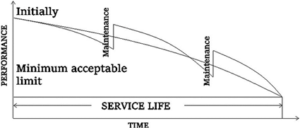
Service life design principle based on life cycle cost of infrastructure
For example, in the city of Hong Kong, a reputed educational foundation retained RaSpect to provide periodic inspection services over several years to take better care of their school infrastructure. This not only helped ensure building safety for the users including young students, but also facilitated timely and qualitative repair and maintenance intervention, ensuring extended service life for the assets. By continuously monitoring the condition of building materials and structural components, the system was able to identify emerging issues early, allowing for targeted repairs before major damage occurred. This is expected to extend the expected service life of these properties significantly, dramatically reducing the carbon footprint associated with the structures.
Similarly, in Brisbane, the Queensland government retained Azure Facade – a RaSpect partner that utilized RaSpect’s technology to optimize the maintenance of its parliament annexe building. This structure was inspected using Unmanned Aerial Vehicles (or drones) to identify the building defects that were then repaired. The quality of the work was monitored on the Inspectica platform using data generated by the DefectCapture app. Over its extended life of several decades, it is expected that RaSpect’s platform will help improve inspection and maintenance management, thereby adding to service life and reducing lifecycle carbon footprint.
These are just a couple of examples of how RaSpect is helping organizations build infrastructure that is truly built to last. By embracing climate-responsive design, sustainable materials, and proactive maintenance strategies powered by AI, we can create resilient structures that withstand the test of time.
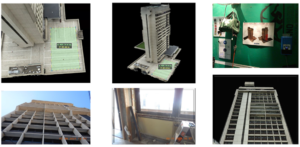
Queensland Parliament Annex Remediation by Azure Facade
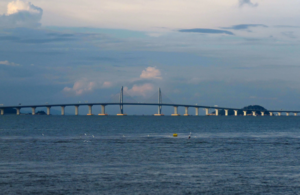
Hong Kong–Zhuhai–Macau Bridge @Wikipedia
The Hong Kong-Macau-Zhuhai sea crossing opened in 2018, with a length of 55 km (34 miles), the longest at the time, built for $20 billion. It includes a 6.7 km (4 miles) undersea tunnel section and was designed to withstand earthquakes and typhoons. The project was challenging in all aspects, including its location in a very aggressive marine environment, which causes corrosion of steel reinforcement used in concrete structures and any other metal elements. Its design service life is 120 years while the typical design service life of ordinary reinforced concrete buildings is between 50 and 75 years – important infrastructure projects such as dams and bridges are currently designed for 100+ years of service life. These can potentially last much longer provided the latest inspection, repair and maintenance technologies are applied.
Ultimately, the path to a low-carbon future requires a fundamental shift in how we approach infrastructure. It’s not enough to simply improve energy efficiency or increase renewable energy generation. We must also prioritize the longevity and adaptability of our built environment.
I encourage all infrastructure stakeholders – from policymakers to developers to facility managers – to explore how innovative technologies like RaSpect’s can help extend the service life of critical assets. By doing so, we can make significant strides in the fight against climate change and build a more sustainable world for generations to come.