Ambika Prasad Kanungo, Bhubaneswar, 5 August 2026
Following the 2014 general election, the Bharatiya Janata Party (BJP) was in power in only seven states. By 2026, however, the party had expanded its political footprint significantly, forming governments in 19 states as well as in the Union Territories of Delhi and Goa. During this period, Narendra Modi secured an unprecedented third consecutive term as Prime Minister, consolidating the BJP’s position as the country’s dominant political force.
Despite this remarkable electoral expansion, signs of public discontent have gradually emerged. Several election promises, including the commitment to double farmers’ income, remain subjects of public debate. Concerns over proposals relating to the import of agricultural products from the United States, rising prices of essential commodities, and increasing pressure on household budgets have also contributed to growing dissatisfaction among sections of the electorate.
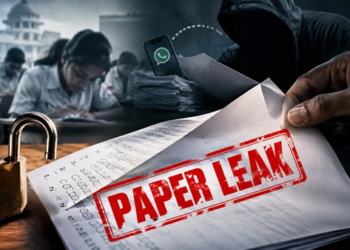
The repeated controversies surrounding alleged NEET question paper leaks further intensified public anger, particularly among students and their families. The prolonged and unprecedented student agitation at Jantar Mantar in New Delhi generated nationwide attention and increased political pressure on the Union Government. The controversy ultimately led to the resignation of the Union Education Minister from the Cabinet. Political observers believe the episode had an impact on recent Assembly by-elections and serves as a reminder that the ruling BJP may need to recalibrate its political strategy by placing greater emphasis on public welfare programmes and effective governance to retain popular support.
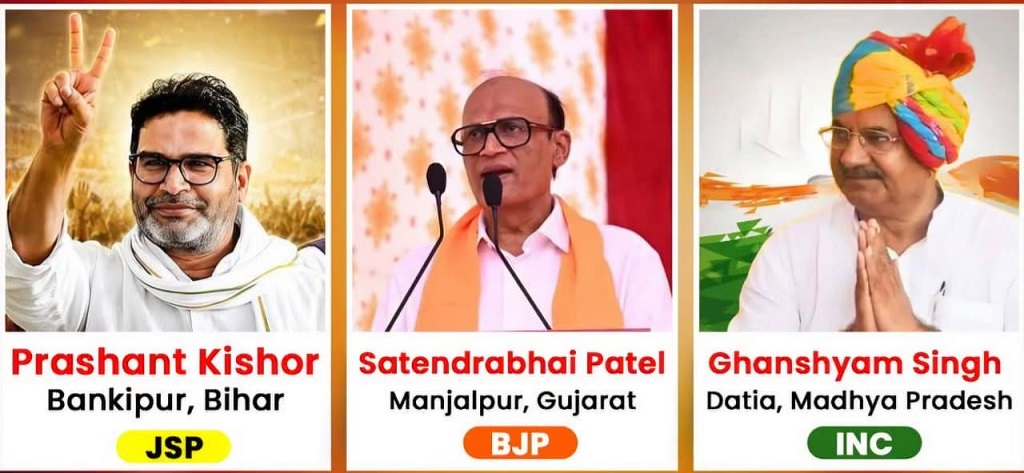
The recent Assembly by-elections held in three states appear to reflect this changing political mood. Of the three seats contested, the BJP managed to retain only the Manjalpur constituency in Gujarat. It lost the Bankipur Assembly seat in Bihar, while the Congress successfully retained the Datia seat in Madhya Pradesh. These outcomes have prompted political analysts to question whether the BJP’s electoral dominance is beginning to face stronger challenges.
The most significant setback for the BJP came in Bihar’s Bankipur Assembly constituency. The seat was vacated after the party’s National President, Nitin Naveen, resigned upon being elected to the Rajya Sabha and subsequently assuming the party’s national leadership.
It is noteworthy that in the 2025 Assembly election, Nitin Naveen had won the Bankipur seat by an impressive margin of 51,936 votes, securing 62.66 per cent of the total votes polled. However, within just nine months, the political equation changed dramatically. In the by-election, BJP candidate Neeraj Kumar secured only 34.04 per cent of the vote and suffered defeat. Jan Suraj Party candidate Prashant Kumar emerged victorious with 64,151 votes, while Neeraj Kumar polled only 44,827 votes.
Such a sharp decline in the BJP’s vote share within a short period suggests a noticeable erosion of the party’s support base in the constituency. The result has raised important questions regarding the BJP’s prospects in Bihar ahead of future elections. At the same time, the victory has provided the Jan Suraj Party with an opportunity to establish itself as a credible alternative political force in the state, a development that is attracting considerable political attention.
In Madhya Pradesh, the Datia Assembly by-election also delivered encouraging news for the Congress. Congress candidate Ghanshyam Singh defeated BJP nominee Ashutosh Tiwari by a margin of 6,016 votes, providing the party with renewed momentum ahead of future electoral contests in the state. Ghanshyam Singh secured 66,757 votes (42.39 per cent), while Ashutosh Tiwari polled 60,741 votes (38.57 per cent), indicating that the BJP found itself on the defensive in a constituency where it had expected a stronger performance. The by-election was necessitated following the disqualification of sitting Congress MLA Rajendra Bharti.
The BJP’s only consolation came from Gujarat’s Manjalpur Assembly constituency, a long-standing party stronghold. BJP candidate Satendrabhai Patel retained the seat comfortably by defeating Congress candidate Bhikabhai Rabari by a margin of 30,630 votes. The outcome was largely in line with the constituency’s electoral history. In the 2022 Assembly election, BJP candidate Yogeshbhai Narendradas Patel had secured an overwhelming 75.85 per cent of the votes, making Manjalpur one of the party’s safest seats.
While by-election results do not always predict the outcome of general elections, they often serve as an important political barometer. The recent results indicate that voter expectations are evolving and that issues such as inflation, employment, agricultural distress, education, and governance are increasingly influencing electoral behaviour. For the BJP, the by-elections offer both a warning and an opportunity—to reconnect with voters through responsive governance and stronger welfare initiatives. For the opposition, particularly emerging regional forces such as the Jan Suraj Party, the results suggest that political space may be opening for credible alternatives. The coming months will reveal whether these by-election outcomes represent isolated setbacks or the beginning of a broader shift in India’s political landscape.