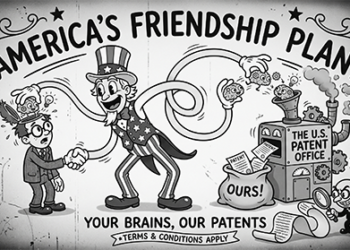

The Nirvik Bureau, Bhubaneswar, 3 July 2026
>Welcome to the latest episode of Global Tech Theater, where the United States – in its starring role as Part-Time Gatekeeper, Full-Time Impresario – has decided that the safest way to keep control of a tool everyone needs is to tell half the planet: “No shoes, no shirt, no access to our giant thinking machine.”
Act I: The Grand Gesture
In a plot twist nobody trained in geopolitics finds surprising anymore, the U.S. proclaimed it would keep the keys to frontier AI under the velvet rope. Not out of malice, mind you – but in the name of national security, court filings, and excellent improvisational governance. Anthropic was politely asked to play bouncer; then, after a graceful two-week tango with regulators and lawyers, the company was told it could let the tourists back in. Curtain call. Audience applauds. Confusion continues.
Act II: Diffusion by Disobedience
Every wise autocrat in history has known the law of unintended consequences: if you build a wall, people will learn to build tunnels, trade routes, or better pickaxes. The U.S. move, meant to slow others, functions rather like putting an umbrella over a bonfire. China, EU, Japan, India and whoever else reads policy briefings for sport have collectively shrugged and said, “Fine – we’ll make our own. In bulk. With chips.” Open-source projects bloom like mushrooms after rain; sovereign compute investments boot up like eager servers after a power cycle.
Act III: The Alliance Nobody Planned
The ban’s true magic trick is teamwork. Countries that once debated the ideal diplomatic tea blend are now drafting memos titled, “Cooperate to Counter Hegemony (and Also Not Be Caught Off-Guard Next Time).” The net result: a patchwork of alliances, cloud swaps, and a polite but determined sharing of model weights. The U.S. hoped to keep the world dependent; instead it bought the rest of humanity a deadline and a sense of purpose.
Act IV: Innovation — Served Cold, Then Reheated
Remember GPS? Once a military toy, it democratized navigation precisely because Uncle Sam decided everyone could use it. With AI, the reverse is playing out: hope your legal theory holds up in court; meanwhile someone else turns your restriction into their launchpad. Hardware bans pushed domestic chip design in unlikely places; software fences encourage model-making marathons. Banishment from the Silicon Valley lunch table only speeds the recipe-sharing. The world is now very hungry.
Finale: The Indian Tryst With Sovereignty (And Other Practicalities)
For countries like India – which already treat scale as an essential spice – this was less an alarm than a recipe card. Build imperfect foundations, deploy at scale, and invite multiple kitchens to try the dish. The U.S. wanted monopoly power; it delivered urgency. The rest of the world will take that urgency and monetize it into sovereignty, supply chains, and the comforting hum of locally owned data centers.
Epilogue: The Market for Irony
So congratulations, U.S. policy-makers. You have successfully converted unilateral leverage into multilateral collaboration, hoarded competence into distributed competence, and turned a private-sector product into a global public project. Whether this was tactical genius or performative drama depends on your taste for irony. Either way, expect more ladders, more windows, and a treaty or two — because when one country locks the door, the rest of the world builds a house.