The Nirvik Bureau, Bhubaneswar, 28 June 2026
Six names, one memorial, and a marketing team quietly taking notes for next year’s emotions.
They finally did what every ceremony, statement, and commemorative plaque in this country has trained us to expect: release a list. After a precisely measured interval of suspense, the government parted the curtains and revealed six names – Subedar Major Pawan Kumar, Rifleman Sunil Kumar, Lance Naik Dinesh Kumar, Agniveer Murali Naik, Havildar Sunil Kumar Singh and IAF Sergeant Surendra Kumar – to be inscribed on the National War Memorial. The Tyag Chakra now accepts them into its circular embrace, along with all the other bricks that quietly carry the country’s official grief.
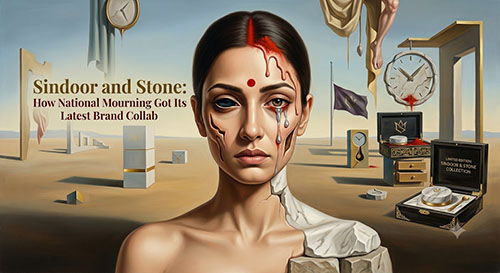
Call it Operation Sindoor: a name chosen with textbook symbolism, because nothing says military precision like a metaphor borrowed from cosmetics. Sindoor – that red smear that traditionally marks marital status – was apparently the perfect word for a four-day campaign of bombs, dogfights and diplomatic press releases. If you ever doubted whether strategy meetings include a creative director, doubt no more. “Vengeance for widows” reads like a product tagline. Next season: khôlianghru, the limited-edition amulet campaign.
The press dutifully served its role too. Headlines ran the risk of either too much sentiment or too much spin, so editors opted for a tasteful blend: solemn, slightly theatrical, and calibrated to leave just enough room for a sidebar about box-office numbers. The memorial’s granite walls will now hold these names where millions can glance, scroll, and double-tap the right condolence emoji. It’s a tidy cycle – sacrifice, release, inscription, PR – topped off with a hero montage and an op-ed about national resolve.
There are efficiencies here. For instance, timing: release the names shortly after a parade of official statements, while the public is still toggling between grief and football scores. Symbolism is repurposed into talking points. Memory is recast as commemoration with a press kit. And surprise – there’s always a fresh narrative waiting in the wings: bravery, retaliation, the moral arc of history bending in a direction most useful to this week’s headlines.
Of course, the families are at the center of this choreography, deserving every honor and every quiet cup of tea. But the state’s manner of handling mourning is a masterclass in modern civic branding: convert personal loss into a national asset, translate sacrifice into stone metrics and keep the copy tight. Inscribe the names; place the photo in the slideshow; share the Reel. A solemn verse here, a stern press release there, and the country moves on with its customary efficiency – outraged for a day, reflective for the length of an anthem, then scrolling.
The choice of the operation’s name does reveal something important about national storytelling. When grief is assigned a symbol borrowed from domestic life, the act of warfare gets wrapped in household nostalgia. It reduces the arithmetic of blood to a single color swiped across centuries of kinship. It comforts those who prefer their geopolitics to arrive in culturally resonant packaging: familiar, marketable, and easily captioned.
So the six names will sit on the granite, forever part of the Tyag Chakra’s solemn geometry. Tourists will read them, schoolchildren might be pointed to them, and ministers will mention them in speeches calibrated to run between advertisements. Meanwhile, the country will keep performing the ritual it does best: turning sacrifice into a memorial, a talking point, and – if the markets are lucky – an opportunity for tasteful merchandising of national feeling.