The Nirvik Bureau, Bhubaneswar, 27 June 2026
How a three-letter rebellion keeps getting rebranded as devotion, duty, destiny – and occasionally homicide.
They say arranged marriages are a cultural art form: ornate, elaborate, and performed with the solemnity of a state function. There are spreadsheets for dowries, PowerPoints for guest lists and, of course, a whole committee dedicated to translating “Are you okay with this?” into a string of social niceties that read exactly like consent: “If it’s what the family wants…”, “We’ll manage…”, “Maybe after a few years of adjustment…”.
In theory, adults have agency. In practice, we hand the “yes” token to our nearest kin and treat it like holy property. The wedding planner gets 12 vendor calls, aunties get 40 WhatsApp forwards, and the prospective bride and groom get one well-rehearsed line: “We’re excited.” Translation: “We will not ruin this for everyone.”
“No” is treated as an impertinence, a household disruption, a suggestion that someone somewhere might have to admit that years of matchmaking and a carpeted banquet and a playlist vetted by three cousins were, in fact, not destiny but logistics. “No” interrupts narratives. “No” forces grown-ups to confront uncomfortable math: reputations minus relationships equals what, exactly?
So we invented alternatives. We outsourced refusal to silence, to moods, to ‘illnesses’ and to the classic: “We’ll think about it.” We perfected the passive-aggressive yes: a smile, a nod, an acquiescence so elegant it could win a trophy. We also discovered a hidden export item – emotional blackmail – which travels surprisingly well across generations and manages to make consent look like a village custom.
We now live in a nation where consent is tougher to pronounce than ‘samosa’. People will sign digital terms and conditions that run to twenty pages but refuse to sign a one-sentence, no-frills “I do not consent to this marriage.” We require permission to track cookies but not to track someone’s life partner into a marriage they quietly resist. Odd priorities, but trending.
The tragedies pile up as predictable anecdotes. A husband dies in a fort. A wife dies in a marriage. The narrative leans into violence as spectacle — and then folds neatly into a moralistic montage about family values, tradition, and “how could this happen?” as if the answer hadn’t been visible on the invitation card from the start: RSVP required; consent optional.
If marriages were startups, investors would ask for due diligence. But here, we spend on chandeliers and skip the background check. We match Kundalis with the enthusiasm of stockbrokers and then ask the two people involved to improvise a lifetime together from the fifteen minutes they were allowed to speak, supervised, in front of a relative holding chai.
Let’s be honest: the real villain is not the wedding cake; it’s the economy of obligation. We monetise prestige, commodify ceremony and devalue individual will. “No” collapses under the weight of printed invitations and parental dignity. The moment “yes” becomes the easiest option, the institution is not blessed – it’s coerced.
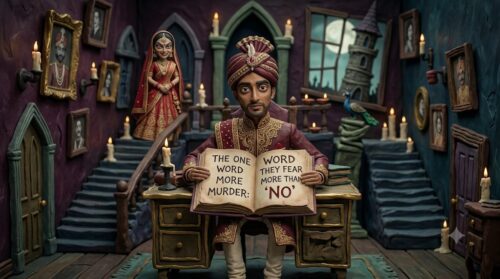
So what would have fixed this? The one word. Short, sharp, inconvenient – “No.” Try saying it. Out loud. In private. Without an auntie ready to faint or a cousin queued to Instagram your shame. If that seems impossible, it only proves the point.
Until we teach “no” to travel without a chaperone, we will keep producing headlines that gasp at violence as if it were a plot twist, rather than the predictable ending of a story where consent was an afterthought and duty the main character.