
The Nirvik Bureau, Bhubaneswar, 27 May 2026
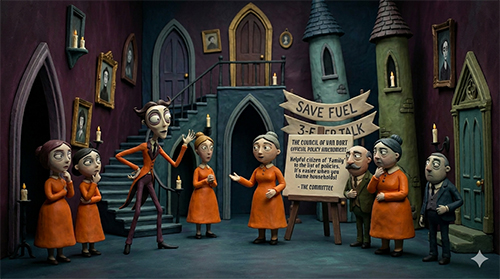
After the Prime Minister’s stirring “save fuel” sermon and Sitharaman’s three-F pep talk, a helpful citizen proposes adding “Family” to the list – because policy is easier when you blame households.
If you thought the government’s new triad – Fuel, Food, Finance – was a tidy checklist for national happiness, relax. Citizens are being encouraged to level up from passive voters to active micro-managers of destiny. First, conserve petrol: the planet will forgive our SUVs if we whisper sweet nothings to our speedometers. Second, hoard lentils responsibly: dal is both nutrition and national security. Third, balance your bank app like a yogi: invest in patriotism, not panic.
Naturally, someone in a quiet corner has proposed the missing piece: the Fourth F – Family (more politely: “population management,” which is bureaucracy-speak for “please stop making tiny humans we can’t invoice”). The suggestion arrived wrapped in compassion and a flowchart, because nothing says empathy like an Excel sheet that estimates children-per-household versus aspirational car-count.
Implementation is delightfully grassroots. Helpful posters will remind couples to “think before you ink” – not tattoos, matrimonial vows. Public service ads will feature smiling families of two kids and one anxious in-law, with the tagline: “Two is enough; everything else is socialist.” Radio jingles will teach condom knots as part of the morning prayers. The Ministry of Future-Proofing (a working title) will launch an app: F4 – FamilyForward – where citizens can book a vasectomy slot, compare tax rebates for child-free couples, and unlock exclusive petrol discounts if their household size stays under the national average.
Of course, this policy will be voluntary. There will be no coercion, only gentle nudges delivered by cheerfully polite robots. Data-driven algorithms will identify “high-risk procreation zones” where incentives will be doubled: free Wi-Fi for every childless home, and a monthly stipend labeled “Population Prevention Perk.” Influencers will monetize the trend with trending hashtags like #NoMoreToysJustTurmeric and #TwoKidsOneScooter.
Critics – the usual suspects – will point out minor complications. Some will remind us that population growth is uneven and that people make babies for reasons beyond petrol price anxiety: old-age support, cultural expectations, and the stubborn human desire to love. Others will note the ethical hazard of holding a nation’s reproductive choices hostage to macroeconomic graphs. But these are curable with a nationwide empathy campaign: seminars on “conscious consumption” that pair composting tutorials with child-reduction testimonies from celebrities who once owned small yachts.
The thinking is elegant in its simplicity: fewer people equals fewer throbbing demands on Fuel, Food, and Finance. Fewer commuters, fewer ration cards, fewer voices on social media demanding better services. It’s a win-win – fewer voters complicating policy, and more room in the metro for those who remember to fold their umbrellas.
Naturally, dissent will be framed as the luxury of abundance. Those who worry about eldercare, shrinking workforces, or the moral implications of incentivized family planning will be tactfully rebranded as “population nostalgics.” Debates will be held, of course, on prime-time channels between a smiling minister, a celebrity doctor, and a retired bureaucrat who once instituted a perfectly reasonable parking rule in 1997.
In the end, the Four Fs will roll out like any good public initiative: rhetorical clarity, glossy brochures, and a user-friendly mobile interface that charges your wallet while saving the nation. And if, in ten years, demographers warn of an aging population and economic strain, policymakers will respond with the same agility that brought us the first three Fs: a catchy slogan, a fresh F-word, and a heartfelt plea for citizens to “do better.”