The Nirvik Bureau, Bhubaneswar, 14 July 2026
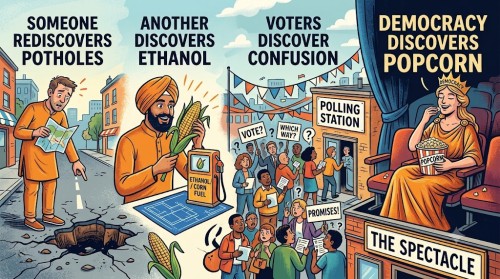
Gadkari rediscovers potholes; Puri discovers ethanol. Voters discover confusion. Democracy discovers popcorn.
They say politics is theatre, but sometimes it’s less Shakespeare and more slapstick with policy papers. In the latest act, Nitin Gadkari has returned to the highways with the fervour of a man who’s just realised his car has been leaking reputations for months. Hardeep Singh Puri, meanwhile, has taken up the delicate art of defending E20 – like a diplomat asked to explain why the host’s soup is now 20% hand sanitizer.
Flip the scene: Gadkari had been moonlighting as the petroleum ministry’s mascot – cheerleading ethanol blends with the same gusto he once reserved for ribbon‑cutting expressways. The nation watched, puzzled. Was this a cunning plan to lubricate the economy or merely a case of ministerial musical chairs played after too many committee meetings? Then, in the quietest possible reshuffle, they swapped back. Gadkari is on the road again, broom in one hand and a traffic cone in the other; Puri is back amid blended oil, trying to make sense of a fuel policy that sounds like a nightclub cocktail.
The optics were delicious. The man who lives for asphalt had been found steering the petrol tanker while a tuxedoed diplomat peered over his shoulder: “Slight left at the subsidy, mind the phase separation.” The nation’s inbox filled with conspiracy theories, blender puns, and family tree investigations – because why not add a dash of personal enterprise to the national palate? When facts arrive, they tend to be layered, like E20 in a bottle left in Kolkata heat: pretty to look at, separated in the middle, and liable to stain the carpet.
Gadkari’s return to pothole scouting is cinematic. Videos of monsoon‑gouged highways went viral, and suddenly the Roadkari found the road again – presumably following the GPS prompt marked “PR.” He jumped out of the tanker like a man exiting a sinking Tweet thread, dusted his dungarees, and began inspecting craters with the tenderness of a parent patting a sleeping elephant. Puri, who’d been enjoying the rarefied air of policy briefings and press conferences, was left to explain why India was accelerating towards E20 as if someone had mistaken the target year for a film release date.
Puri’s defence reads like diplomatic poetry: earnest, a little out of touch with market indices, and blissfully indifferent to Brent crude’s moods. He fends off questions about timelines with the dignity of a man explaining why his watch works on lunar time. The petroleum brief is now a hostage drama in which ethanol plays both villain and hero – cheap, renewable, and suspiciously eager to be the protagonist.
The easiest takeaway is procedural: cabinets decide, ministers endure. The more fun takeaway is theatrical: democracy ran a quick costume change and forgot to tell the audience. The result is a nation trying to parse policy through the same lens it uses for cricket commentary – who’s batting, who’s bowling, and why the coach is sitting in the stands.
If nothing else, the swap proves a durable truth: ministers are interchangeable, but headlines are not. Gadkari will fix the road that led him into this story; Puri will steward a policy that keeps economists awake and social media inventing new metaphors. Meanwhile, the rest of us will keep watching, clutching our fuel receipts and our umbrellas, waiting to see whether the next reshuffle replaces ministers or just their nameplates.
Final note: if the next election promises clarity, it should come with a refund policy.