The Nirvik Bureau, Bhubaneswar, 9 August 2026
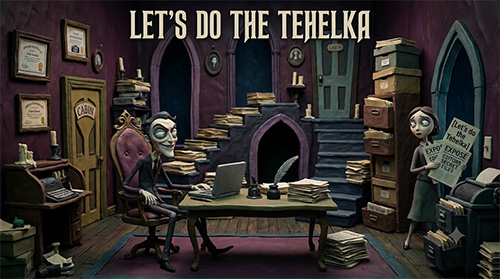
A newsroom’s greatest exposé was eventually found hiding behind its own editor’s cabin door.
There was once a magazine that treated power the way a street dog treats a passing ministerial convoy: with instinctive suspicion, unembarrassed noise and, occasionally, excellent aim.
It investigated politicians, corporations, generals, godmen, arms dealers and every species of well-fed public liar. Its reporters travelled into forests, war zones and bureaucratic basements, armed with notebooks, bad tea and the dangerous belief that truth could inconvenience the powerful.
At the centre of this revolution stood an Editor: brilliant, persuasive, literary, formidable. He could spot a story in a landfill, turn a rookie into a reporter and make an entire newsroom believe that courage was a renewable resource.
Young journalists arrived carrying cheap backpacks, borrowed English and heroic delusions. They came from small towns, Malayalam-medium schools, Hindi newspapers, public universities and families that believed journalism was either a noble calling or a sophisticated form of unemployment. They were taught the sacred creed: Question power. Doubt authority. Trust no institution.
It was an excellent creed.
It merely had one small printing error.
The Editor was apparently not included.
The newsroom that audited the nation misplaced its own receipt book
For years, the institution asked India difficult questions. It interrogated privilege in air-conditioned rooms and brutality in distant districts. It exposed those who believed their office, uniform, wealth or surname had made them immune to consequence.
Then one day, consequence arrived at the magazine’s own reception desk.
It did not come wearing a ministerial kurta, carrying a corporate briefcase or accompanied by security guards. It came as an allegation from a young woman colleague – someone placed under the authority of a man who had built a career explaining the ethics of authority to everyone else.
Suddenly, the great national microscope developed a foggy lens.
The organisation that had demanded survivors be heard discovered that hearing becomes technically complicated when the accused has an editorial column, a legendary reputation and a preferred brand of moral vocabulary. The defenders of accountability began conducting emergency research into nuance. The champions of feminism found themselves trapped in an elevator between “due process” and “please don’t damage the brand.”
And the brand, as always, required protection.
Not the young employee. Not the principle. Not the truth.
The brand.
Hero worship: journalism’s most expensive office furniture
The real scandal was not only the alleged abuse of power, but the astonishment that followed. How could a man who wrote beautifully about justice fail to practise it? How could someone eloquent on equality misunderstand consent? How could a public defender of the powerless misuse private power?
This is the sort of question asked only by people who still confuse adjectives with character.
India has long promoted the habit of treating intellectual brilliance as a character certificate. If a man can quote poetry, identify structural injustice and denounce fascism with proper punctuation, surely he cannot be a coward in private.
But eloquence is not integrity. A revolutionary vocabulary is not a moral spine. And a man’s ability to expose hypocrisy in Parliament does not automatically mean he has evicted it from his own bloodstream.
The conviction, then, is not merely one man’s legal ending. It is a reminder to every newsroom that its ethics manual cannot be stored exclusively in PDF format. A magazine cannot publish sermons on accountability while treating the editor’s cabin as a sovereign republic.
The reporters, photographers, designers, researchers and staff who built great journalism should not be reduced to one man’s collapse. Their work remains theirs. But its lesson remains too.
Investigate power – especially when it signs your appraisal form.
Because the most dangerous untouchable is not always the minister, the tycoon or the general.
Sometimes, he is the man who taught you to ask questions.