The Nirvik Bureau, Bhubaneswar, 6 April 2026
When the world catches fire, Washington reaches for the popcorn
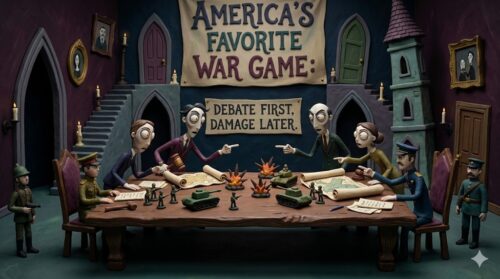
The latest split in US politics over the Iran war is a perfect reminder that American democracy is at its most united when it is arguing loudly in public. One camp wants to “send a message,” which is Washington-speak for “let’s see what happens if we press the big red button and act surprised.” The other camp wants restraint, but not necessarily because it hates war – more because it knows the invoice usually arrives with interest, body bags, and a very inconvenient election cycle.
This is how American foreign policy works now: first, invent a moral emergency; second, wrap it in national security language; third, hand it to cable news and let the talking heads chew it into confetti. If you listen carefully, every politician sounds like a war poet with a donour list.
The hawks have entered the chat
The pro-intervention crowd always arrives dressed as adults in the room. They speak in grave tones, use phrases like “credibility” and “deterrence,” and act as if bombing is just diplomacy with extra sound effects. Their logic is beautifully simple: if Iran does something dangerous, America must respond forcefully. If America already responded forcefully last time and things got worse, then clearly the mistake was not enough force.
Meanwhile, the anti-war side rises up with the same face it has worn through every recent disaster: the face of someone who remembers Iraq, Afghanistan, and the giant patriotic hangover that followed both. They warn that another conflict will drain treasure, drag soldiers into a maze, and leave Washington explaining, once again, that “the situation on the ground” is more complicated than anyone predicted. Translation: the experts were wrong, the politicians were louder, and the public gets to pay for the lesson.
Same circus, new poster
The real beauty of the split is how familiar it feels. America keeps repainting the same war machine and calling it strategy. One year it is liberation, another year it is security, another year it is regional stability – which is political vocabulary for “please do not ask what happens after the airstrikes.”
Every administration enters office promising discipline and exits after discovering that Middle East policy is less like chess and more like throwing expensive furniture into a hurricane. Still, the speeches remain elegant. The language is always about values, leadership, and hard choices. Never about vanity, fear, or the desperate need to look strong while the world rolls its eyes.
The punchline writes itself
The funniest part is that everyone claims to be the cautious one. The hawks insist they are only preventing chaos. The doves insist they are only preventing catastrophe. Both groups agree on one thing: if this ends badly, the blame must be placed somewhere else, preferably on the next administration, the intelligence agencies, the media, or “the complexity of the region,” which is Washington’s favourite excuse because it sounds intelligent and absolves everyone.
So the debate continues, the panel shows keep spinning, and the politicians keep performing their favourite role: the nation’s confused parent who has no idea where the car keys are, but still insists on driving.
In America, war is never just war. It is a branding exercise, a fundraising tool, and a televised personality contest – with real casualties as the special feature nobody asked for.