The Nirvik Bureau, Bhubaneswar, 11 April 2026
India’s newest judicial magic trick
The impeachment probe was all set to begin, the panel had stretched its legs, the Constitution had cleared its throat, and the nation was ready for another episode of “Let’s See What Happens When Accountability Arrives Late.”
Then, just in time, came the hero of the story: resignation.
Not justice. Not explanation. Not clarity. Just resignation – that old, reliable plug-in device used whenever institutions feel a mild tremor of responsibility and decide to jump out of the building through the side door.
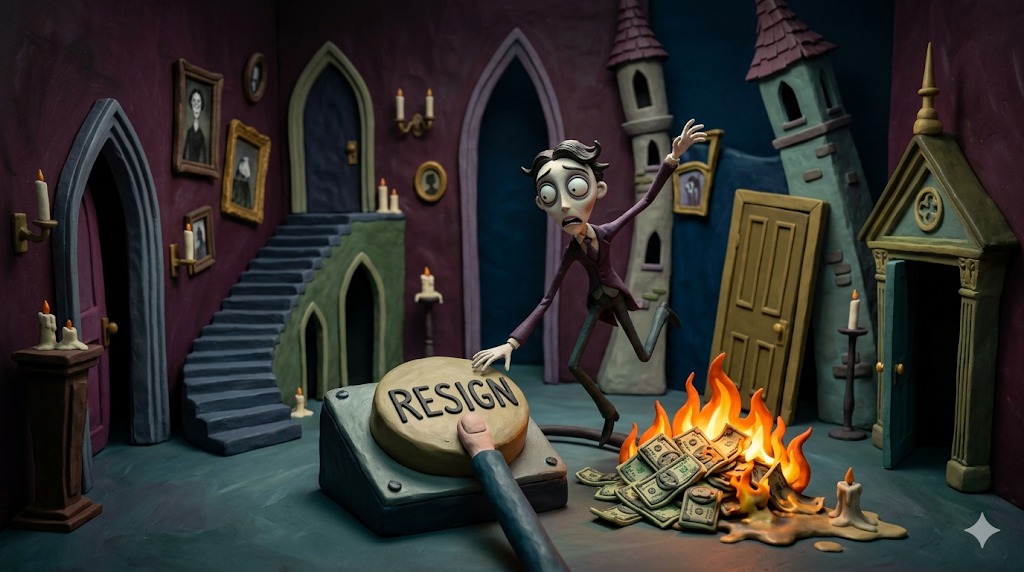
Justice Yashwant Varma’s resignation has now conveniently parked the whole impeachment business in the garage. The probe was supposed to ask questions. But resignation walked in wearing sunglasses, said “no comments,” and drove the evidence away in a government-style convoy of procedure, silence, and perfectly timed constitutional grammar.
The fire was real. The cash was burnt. The confusion remains fresh.
It was one of those stories that only India could produce without seeming to blink.
A fire breaks out. Burnt and partially burnt cash is reportedly found. Denials begin. Inquiries begin. Transfers happen. Committees appear. Petitions fly around like overdue court notices. The public scratches its head so hard it practically enters a separate legal proceeding.
And just when Parliament gets ready to do its ceremonial dance around impeachment, the judge resigns – which in Indian public life is often the equivalent of sweeping the room after the wedding guests have already noticed the cow in the kitchen.
A very efficient disappearing act
This is the beauty of the system.
If the matter is small, ignore it.
If the matter grows, form a committee.
If the committee starts looking serious, call it complicated.
If Parliament wants to move, say the process is underway.
And if the process still refuses to go away, resign.
It is governance as a cartoon trapdoor. One second there is a judge, a probe, and a pile of constitutional seriousness. The next second, whoosh, the floor opens and everyone is left standing there with an official file and a stupid expression.
The resignation does not answer the question, of course. It just changes the question from “What happened?” to “Well, now what?”
That is the most elegant feature of all. In theory, resignation is supposed to be an admission of responsibility. In practice, it has become the public version of saying, “Let’s not ruin the mood.”
A system allergic to consequences
The funniest part is how solemn everything sounds while the escape hatch remains wide open. Articles, clauses, provisos, sections, committees – the full library of constitutional seriousness is unpacked like props in a courtroom drama. But the ending keeps behaving like a slapstick scene.
One hand writes the notice. Another hand forms the committee. A third hand says there is no rush. Then, from behind the curtain, resignation yells, “I’m not dead, I’m just unavailable.”
And that, somehow, is enough to pause the whole machine.
The final scene
So the nation once again learns a familiar lesson: in India, accountability rarely gets arrested. It gets delayed, transferred, narrated, and occasionally retired with dignity.
The burnt cash may have gone up in smoke, but the real magic was in how fast the fire turned into a procedural fog.
By the time the probe arrived, the suspect had already become a former judge, and the controversy had been neatly converted into a constitutional shrug.